You do not need to be “fit” to start, you just need a plan that feels good in your body and clear in your head.
Starting Fitness Classes for the first time can feel weirdly intimidating, even when you are excited. You might wonder what to wear, whether you will keep up, or if everyone else already knows what they are doing. We get it, and we design our beginner experience so you can settle in quickly and feel capable right away.
In Maplewood, a lot of beginners want two things at once: a workout that actually changes your strength and stamina, and a class that does not leave you achy, fried, or confused. Our approach is built around intentional movement, precise mechanics, breathing, and alignment, so you are not just “getting through” a workout. You are learning how to move well.
If you are looking for Fitness Classes in Maplewood NJ that feel creative, structured, and supportive, the good news is that you can absolutely find your groove without needing a dance background or a lifelong sports résumé. You just need the right class format and a little consistency.
What “finding your groove” really means in beginner Fitness Classes
Your groove is not one perfect workout style. It is the moment you stop bracing for the class and start moving with confidence. For beginners, that usually happens when three things line up: you understand what you are doing, you can breathe through it, and the pace challenges you without overwhelming you.
We coach groove through simple but powerful details: how you stack your ribs over your pelvis, how you load your hips, how you stabilize your shoulders, and how you exhale with effort. Those details are not fussy, they are freeing. When your mechanics improve, you waste less energy, your joints feel safer, and your body starts to feel like it is working with you instead of against you.
This is also why we keep class sizes small. Small-group coaching lets us actually see what is happening and give you cues that make an immediate difference. For a beginner, that is huge. It turns Fitness Classes from a guessing game into a learning experience you can feel in real time.
The beginner-friendly structure we use (and why it works)
Our core format is functional strength interval training with mindfulness baked in, not sprinkled on top. You will rotate through strength and conditioning intervals that build cardiovascular endurance, strength, balance, and flexibility, while we coach breathing and alignment so you stay connected to your body.
Beginners often assume intervals mean chaos. Ours are intentional. We use clear work and rest windows, repeat patterns so you can practice, and progress exercises in a way that respects where you are starting. The goal is not to bury you. The goal is to help you build skill and capacity, class by class.
Here is what you will notice when the structure fits you:
- Your breathing starts to match the effort instead of lagging behind it
- You can feel specific muscles working, not just “everything hurts”
- You recover faster between rounds because the movement is more efficient
- Your confidence grows because the class stops feeling unpredictable
Those are the quiet wins that make you keep showing up, and they are usually what beginners are missing when they bounce from workout to workout.
Five creative class ideas to help Maplewood beginners find their groove
Below are five “groove” themes we use to make Fitness Classes feel fresh while still grounded in fundamentals. Each one is creative in the sense that it keeps you engaged, but it is also practical, because it builds the movement skills you will use everywhere.
1) Mindful strength intervals with rhythm-based pacing
This is the sweet spot for beginners who want to feel athletic without feeling thrown into the deep end. We use steady intervals and consistent timing so you can focus on form. The rhythm might be as simple as matching an exhale to a lift or keeping a controlled tempo on squats.
Why it works: rhythm reduces mental noise. Instead of wondering what to do next, you lock into a pace, and the workout becomes almost meditative, even when it is challenging.
2) Low-impact cardio that trains your joints to trust you
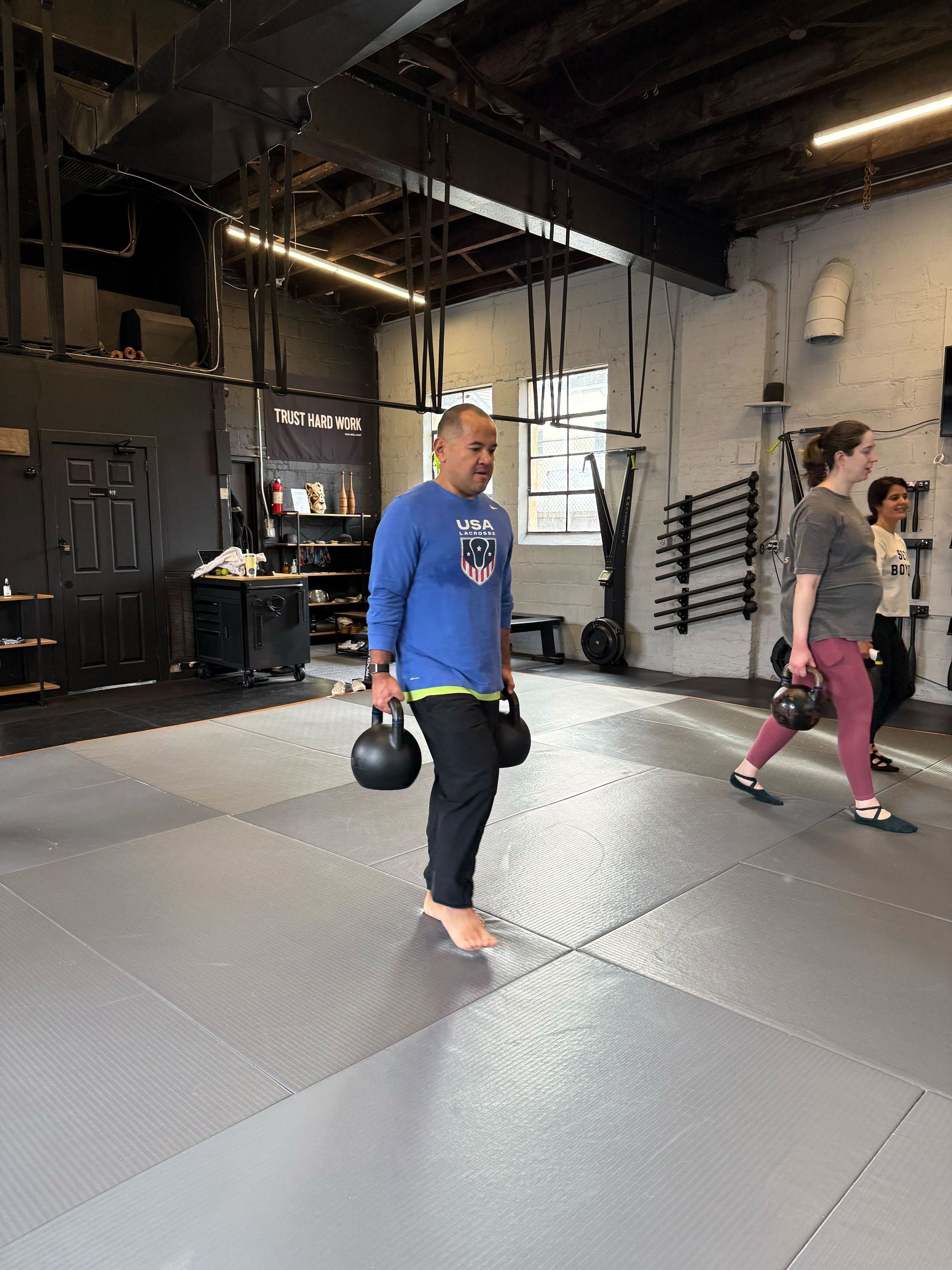
A lot of beginners think cardio has to mean pounding, jumping, or soreness in the knees. We prefer low-impact conditioning that still raises your heart rate, like loaded carries, step patterns, controlled speed changes, and breath-led intervals.
Why it works: you build cardiovascular endurance while practicing alignment under fatigue. That is a real-life skill, and it translates to better posture, better balance, and fewer “tweaks” when you move fast outside of class.
3) “Core and control” sessions that make everything else easier
Core training gets marketed as crunches. We do it differently. We treat your core as a pressure system and a stability system: breathing mechanics, rib positioning, pelvic control, and anti-rotation strength.
Why it works: when your trunk is stable, your limbs can work harder with less strain. Beginners feel this immediately in planks, rows, presses, and even walking up stairs. It is not flashy, but it is foundational.
4) Balance and unilateral days (the secret sauce for beginners)
Unilateral work means one side at a time: split squats, single-arm presses, one-leg hinges, offset carries. It is challenging in a sneaky way, and it is one of the fastest ways to build coordination and stability.
Why it works: beginners often have a “strong side” that dominates. Unilateral training evens things out, improves balance, and teaches you to own your movement. If you have ever felt wobbly or unsure during exercise, this is how we clean that up.
5) Mobility-led strength that feels like a reset, not a beatdown
Some days you want a workout that opens you up and makes you feel better walking out than you did walking in. Mobility-led strength blends controlled ranges of motion, light-to-moderate loading, and breathwork so you gain flexibility without getting floppy.
Why it works: you improve mobility in positions you can actually control. That is the difference between stretching and moving well. For beginners, it also helps reduce soreness and supports consistency, which is honestly the whole game.
What to expect in your first few weeks of Fitness Classes
Beginners do best with a simple timeline. Not rigid, just realistic. You do not need to crush every class. You need to stack reps and learn your body.
1. Week 1: Learn the language of movement
You will get familiar with our cues for alignment, breathing, and mechanics. Expect a lot of “oh, that is what you meant” moments.
2. Week 2: Build repeatable effort
The exercises feel less new, so you can work harder without losing form. Your recovery between intervals usually improves here, too.
3. Week 3: Notice strength showing up outside class
Carrying groceries feels easier. Stairs feel less dramatic. Your posture is better without thinking about it.
4. Week 4: Start feeling like this is your thing
This is when many beginners feel their groove click. You still get challenged, but you feel capable and steady.
If you are returning after time away, the timeline is similar. Your body remembers more than you think, and we meet you where you are that day, not where you were five years ago.
How we keep beginners safe, supported, and progressing
Safety is not just “be careful.” It is a system. We coach form, we scale movements, and we keep the environment calm enough that you can actually listen to your body. For many beginners, the biggest risk is trying to do too much too soon because adrenaline kicks in. We do not let that become the culture.
We also treat progress as more than adding weight. Progress can mean cleaner reps, steadier breathing, better balance, or less tension in your neck and shoulders. Those are real wins, and they add up fast.
Here are a few ways we tailor Fitness Classes to beginners without watering them down:
- Exercise options that match your current mobility and strength
- Coaching cues that emphasize alignment and joint-friendly mechanics
- Intentional rest so you can keep quality high across the whole session
- Small-group format so you are not lost in the crowd
This is the kind of coaching that helps you build confidence and consistency, which are the two things that make fitness stick.
Quick FAQ for Maplewood beginners
Do I need experience to join?
No. Our coaching is designed for beginners, and we scale everything so you can work at the right level from day one.
What if I am not coordinated?
That is more common than you think. Coordination improves with practice, and our emphasis on mechanics, breathing, and alignment helps you learn faster.
Will I get a good workout if it is low-impact?
Yes. Low-impact can be extremely challenging when it is programmed well, especially when we use strength intervals, carries, tempo, and breath control.
How often should I come at the start?
Most beginners do best with a consistent routine, often 2 to 3 classes per week. We can help you choose a schedule that matches your recovery and goals.
What should I bring?
Wear comfortable workout clothes and bring water. If you are unsure, we can point you to simple gear basics that work for any class.
Take the Next Step
If you want Fitness Classes that help you feel stronger, more coordinated, and more present in your body, our small-group approach is built for that. We focus on intentional movement, clear coaching, and a pace that helps beginners learn safely while still getting real results.
Soma MVMT is our Maplewood home for mindful functional strength and interval training, and we would love to help you find the groove that actually fits your life, not just your motivation on a random Monday.
New to fitness or movement training? Start your journey with a beginner-friendly class at Soma MVMT.