Fun comes back fast when your workouts feel purposeful, coached, and shared with people who actually notice you.
If you have ever started (and stopped) a workout plan more times than you can count, you are not alone. Most adults do not quit because they hate moving. More often, they quit because the routine feels random, lonely, or like punishment. That is exactly why Fitness Classes have become such a steady, realistic way to stay consistent in Maplewood.
We see it every week: when you show up to a coached class that has structure and a clear start and finish, exercise stops being a question mark. You do not have to wonder what to do, how hard to go, or whether it is working. You just walk in, get coached, and leave feeling like you did something that matters.
And yes, we care about results. But we also care about something many adults forget to prioritize: enjoyment. Not entertainment for entertainment’s sake, but the kind of fun that makes you want to come back tomorrow because your body feels capable and your brain feels calmer.
Why workouts stop working when they stop being enjoyable
Motivation is a shaky plan. We would rather build something sturdier: a routine that fits your life and gives you small wins you can feel.
When exercise becomes a grind, it usually comes down to one of these patterns. Either you are doing too much too soon, repeating the same stale workout, or pushing intensity without a clear progression. High effort is not the issue. High effort with no plan is.
Enjoyable Fitness Classes solve a practical problem: consistency. A set class time and a coach-led session remove a lot of the friction that makes people skip. You do not have to negotiate with yourself after a long day. You simply follow the schedule, show up, and let the hour do its job.
What “fun” actually means in a good class
Fun is not gimmicks. For most adults, fun looks like competence. It is the quiet confidence of learning how to squat without your knees yelling at you. It is finishing a conditioning interval and realizing you can breathe again in under a minute. It is recognizing faces and knowing you belong in the room.
In our Fitness Classes, fun also comes from variety with intention. We do not throw random exercises together just to keep things “interesting.” We rotate movements and training focuses so your body adapts, while the overall structure stays familiar enough that you can track progress.
When you feel safe and challenged at the same time, the experience changes. You stop bracing for the workout and start leaning into it.
Small-group training: the sweet spot between “on your own” and one-on-one
A big reason Fitness Classes in Maplewood, NJ are growing is that people want coaching and community without feeling invisible. Small-group training hits that balance.
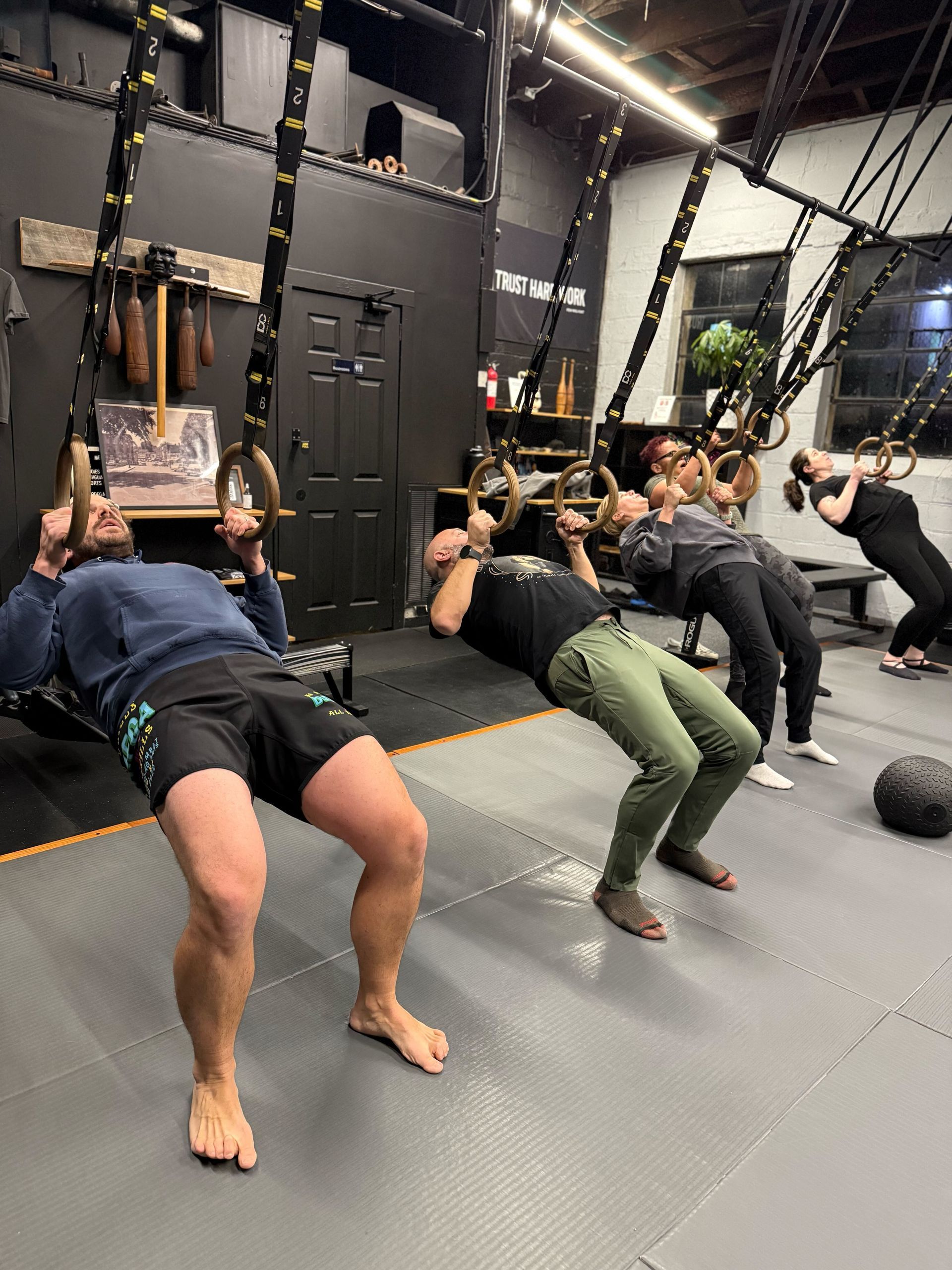
We cap class size at 12 participants. That limit is not a marketing line, it changes what coaching looks like in real time. With a smaller room, we can actually see you. We can cue your breathing, adjust your stance, and give you a regression or progression on the spot.
It also makes the social side feel natural. You are not performing in front of a crowd. You are working alongside a few other adults who are doing the same thing: trying to get stronger, feel better, and stay consistent.
The training trends are clear: functional fitness and strength are in
If fitness content online feels split between bodybuilding culture and flashy “burn” workouts, you are picking up on a real disconnect. The industry has been moving toward practical, functional training and traditional strength work, and it is not subtle. The American College of Sports Medicine’s 2025 fitness trends list includes functional fitness training, traditional strength training, high-intensity interval training, exercise for mental health, and programs for older adults, alongside wearables and data-driven tools.
That combination tells you what people want now: strength that supports daily life, conditioning that feels measurable, and coaching that keeps the process safe and sustainable.
Our classes are built with those priorities in mind, without turning every session into an all-out sufferfest.
What functional training looks like in real life (not just on paper)
Functional training can sound abstract until you connect it to the day you are actually having. The movements we coach are the building blocks of daily strength:
• Squats relate to sitting down and standing up, picking up a kid, or getting low to grab something from a cabinet
• Hinges show up when you lift groceries, pull a suitcase into a car, or shovel snow
• Carries mirror real life more than most people realize, from hauling laundry to carrying bags through town
• Presses and rows help balance your shoulders for lifting, reaching, and posture under load
• Core training is not about crunches, it is about bracing and transferring force safely
In our Fitness Classes, we coach those patterns with attention to alignment, breathing, and control. When you move with intention, you get more out of the same workout, and you usually feel better afterward too.
Inside a 60-minute class: what you will actually do
A lot of people hesitate to try Fitness Classes because they do not know what they are walking into. We keep our sessions consistent in structure so you can settle in quickly and focus on improving.
A typical class runs 60 minutes and follows a clear arc:
Joint mobility and warmup
We start by opening up the joints and getting your body ready to load and move. This is where we work on hips, ankles, thoracic spine, and shoulder mobility, plus activation for the patterns we are training. It is not fluff. It is preparation.
Strength work
Strength is the anchor. We coach lifts and patterns that build durable muscle and better mechanics over time. You might work with dumbbells, kettlebells, barbells, or bodyweight depending on the day and your needs. We progress you gradually because that is how strength actually sticks.
Endurance and conditioning
This is where intervals come in. Conditioning should feel challenging, but it should also be scalable. We adjust pace, load, range of motion, and rest so you can work hard without working reckless. High intensity is a tool, not a personality trait.
Cooldown and recovery
We finish by bringing the system down. Breathing, mobility, and recovery work help you leave feeling better, not wrung out. This matters more than people think, especially if you sit a lot for work or you are managing stress.
That four-part structure is a big reason people describe the experience as “fun.” You know what you are doing, why you are doing it, and you feel the difference between chaos and coaching.
Intensity without ego: how we scale hard work
There is a misconception that group training means everyone does the same workout the same way. That is not how we run our room.
Intensity is adjustable. Two people can do the same interval and both be working at the right level for their body. We can scale by changing weight, speed, reps, time, range of motion, or movement complexity. The goal is effort with good mechanics, not surviving at all costs.
Here is what scaling often looks like in practice:
1. We choose the safest variation that lets you feel the right muscles working
2. We coach technique first, then add load or speed once the pattern is solid
3. We use rest strategically so you can keep quality high across rounds
4. We progress over weeks, not minutes, so your joints and tissues adapt too
That approach keeps Fitness Classes challenging, but not intimidating. You can push hard and still feel in control.
Why classes support mental well-being, even when life is busy
ACSM also lists exercise for mental health as a 2025 trend, and we understand why. A well-run class is a reset. It gives your day a boundary: for one hour, you focus on your breath, your body, and a concrete task.
We are careful with how we talk about this. Fitness is not mental-health care, and it is not a replacement for professional support. But a consistent training routine can help you manage stress, build confidence, and feel more like yourself. Many members tell us the best part is simply having a place to show up where the plan is handled and the atmosphere is supportive.
That is part of what makes the experience feel lighter, more human, and yes, more fun.
What to know before your first class in Maplewood
If you are searching for Fitness Classes in Maplewood, NJ, practical details matter. Here is what we recommend you keep in mind before booking:
• Location: we are at 6 West Parker Avenue, Maplewood, NJ 07040
• Class length: 60 minutes, with a clear structure from warmup to cooldown
• Class size: capped at 12 participants so we can coach, not just supervise
• Who it is for: adults of many experience levels, including beginners and returning exercisers
• What to disclose: injuries, recent surgery, chronic conditions, or movement limitations so we can help you train intelligently
If you are unsure about anything, check the website for the class schedule and reach out with questions before you arrive. You are not bothering us, that is part of good coaching.
How progress looks when you train consistently (beyond the scale)
Some people join Fitness Classes with a specific outcome in mind, and that is fine. But the strongest progress markers are usually the ones you can feel and repeat.
Progress might look like showing up twice a week for a month without falling off. It might look like deeper squats with better control, stronger carries, or smoother breathing during intervals. It might look like fewer aches when you wake up, or more energy during the afternoon slump.
We also love measurable tools. Wearables and apps can be useful for tracking steps, heart rate, and recovery. But data works best when it is paired with coaching, because numbers do not correct your form or choose the right next step. That is our job.
Who tends to thrive in our small-group format
You do not need to be “in shape” to start. You just need to be ready to begin where you are.
Small-group training tends to work especially well if you want guidance without the spotlight, or if you have tried working out alone and it never quite sticks. It also fits adults who want strength and conditioning without the chaos of making up a workout every day.
If you have an injury history or a medical concern, we always recommend you discuss exercise with your healthcare professional when appropriate, and then tell us what we should know so we can coach responsibly.
Take the Next Step
If you want Fitness Classes that feel structured, challenging, and genuinely enjoyable, come train with us at Soma MVMT. We built our Maplewood program around small-group coaching, functional movement, and a 60-minute format that balances mobility, strength, conditioning, and recovery, so you can work hard and still feel good walking out the door.
As a Soma fitness center rooted right here in town, our goal is simple: help you build a routine you can keep, with coaching that meets you where you are and progress you can actually notice week to week.
Continue your fitness journey beyond this article with training at Soma MVMT.