The best results come from training that challenges you and protects your joints at the same time.
Staying consistent with Fitness Classes is hard enough when life is busy in Maplewood, but it gets much harder when you are dealing with a sore back, cranky knees, or a shoulder that never quite feels right. Most injuries are not random. They usually come from small technique breakdowns, doing too much too soon, or skipping the unglamorous basics like warm-ups, breathing, and recovery.
We built our training around a simple idea: if you move well, you can train hard for a long time. That is why our coaching puts mechanics first, then adds intensity in a way that makes sense for your body. You should leave class feeling like you worked, not like you got beat up.
In this guide, we will walk you through what actually keeps people injury-free in Fitness Classes in Maplewood NJ: how to choose the right class structure, what coaching cues matter most, and how our small-group approach helps you progress safely whether you are brand new or already experienced.
Why injuries happen in group training and how we prevent them
In group settings, injuries often come from two things: speed and uncertainty. Speed shows up when the workout gets rushed and form falls apart. Uncertainty shows up when you are not sure what a movement should feel like, so you compensate with whatever your body can manage in the moment.
Our answer is intentional movement: clear standards, consistent class flow, and coaching that corrects small issues before they become bigger ones. We pay close attention to joint stacking, range of motion, and how you generate force, because those details decide whether training builds you up or slowly breaks you down.
Another big factor is load selection. Many people assume heavier is always better, but safe training is about using the right weight for the quality you are working on. We would rather see a clean, controlled deadlift at a lighter load than a heavy pull that twists through the spine. Over time, that approach tends to produce stronger bodies anyway.
Fitness Classes that follow a repeatable structure work better long-term
Random workouts can feel exciting, but they make it difficult to learn patterns and track progress. We use a repeatable framework so you can build skill over time without getting bored. When the structure stays familiar, your body starts to recognize what is coming next, and you move with more confidence and less tension.
Our typical class runs 60 minutes and stays balanced across four key blocks: mobility, functional strength, conditioning, and recovery. That mix matters. If you only train hard and never restore, you get tight, tired, and eventually hurt. If you only stretch and never build strength, you may feel better short term but stay vulnerable when life demands more from you.
You will also notice we treat movement quality like a skill. Squats, hinges, presses, carries, and rotational patterns show up consistently because they are the foundation of real-world strength. We coach those patterns in a way that is scalable, so the same class can serve a beginner learning bodyweight mechanics and an experienced member pushing intensity safely.
How our 60-minute class format supports injury prevention
A lot of Fitness Classes skip the parts that keep you training week after week. Our structure is designed to make the workout feel complete, not rushed, and that is one of the quiet reasons people stay healthier.
Mobility and prep that actually matches the workout
Warm-ups should not be random. We use mobility work that prepares the joints and tissues you are about to use, with special attention to hips, ankles, thoracic spine, shoulders, and breathing mechanics. If you are about to squat, we prepare the squat. If you are about to swing a kettlebell, we prep the hinge and brace.
Breathing matters more than most people expect. When you can control your breath under effort, you can control your ribcage and pelvis position, which supports spinal stability. That reduces the risk of the classic issues people feel during training: pinchy low backs, overworked necks, and shoulders that creep forward.
Functional strength with clear technique standards
Strength work is where we build resilience. We focus on compound movements like squats, deadlifts, push-ups, and kettlebell swings because they train multiple joints and teach your body to produce force efficiently.
We coach tempo, range, and alignment so you do not just move weight, you own the movement. That might mean pausing a squat to find your position, using a slightly higher deadlift start, or adjusting your hand position on a push-up so your shoulders feel stable. Those small edits are often the difference between progress and irritation.
Conditioning that does not sacrifice mechanics
Conditioning should build your engine without turning every rep into a scramble. We program intensity in a way that keeps form intact, and we offer real-time scaling so you can keep moving safely even when you are breathing hard.
Sometimes that means changing the implement, reducing impact, or shortening a range of motion temporarily. That is not a step backward. It is smart training. Your fitness improves faster when you can train consistently, and consistency happens when your body feels safe enough to come back.
Recovery to lock in progress
Cooling down is where we shift your nervous system out of high gear. Recovery work may include breath-focused resets, light mobility, and gentle decompression so you leave class feeling more open and grounded.
This is also where you start noticing the benefits outside the gym: you walk taller, your shoulders settle, and your hips feel less stiff when you get out of the car. That is not a bonus. That is part of training well.
Small-group coaching: the simplest way to train safer
In a packed room, it is easy to become invisible. In a small group, coaching becomes personal without turning the class into a private session. We keep class sizes small so we can watch your movement, give cues you can actually apply, and help you scale on the spot.
That matters for beginners, but it might matter even more for experienced people. When you have trained for a while, you can hide technique problems under intensity. A small group makes it easier for us to catch the subtle things: a knee collapsing inward, a rib flare that dumps into the low back, or a shoulder that is doing too much during pressing.
Small-group energy also helps with adherence. When you recognize the faces around you and feel supported, you tend to show up more often, and showing up is what changes your fitness. A lot of people are surprised by how motivating that simple community rhythm can be.
Real-time scaling: what it looks like in the moment
Scaling is not just swapping an exercise. It is adjusting the workout so you still train the intended quality while respecting your current capacity. During Fitness Classes, we make these adjustments constantly, and we do it without making it awkward.
Here are a few examples of how we keep training safe while still challenging:
• If push-ups bother your shoulders, we change your angle, refine your plank position, and build strength gradually instead of forcing reps.
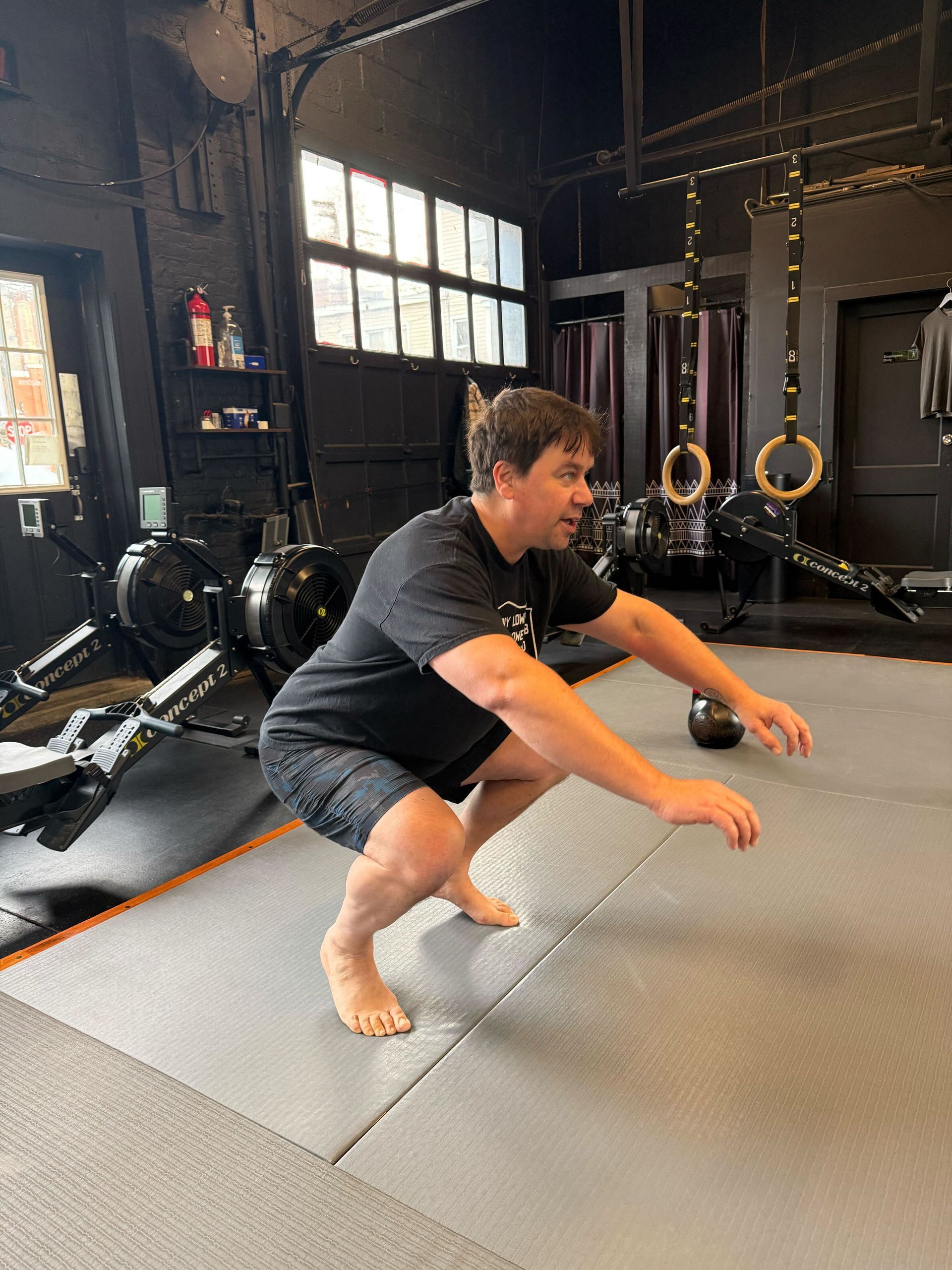
• If your squat depth is limited today, we use a target or adjust stance and breathing so you can move well and stay pain-free.
• If kettlebell swings feel like they hit your low back, we slow down, coach the hinge and brace, and choose a load you can control.
• If impact is the issue, we swap high-impact conditioning for lower-impact options that still raise your heart rate.
• If fatigue is causing form to fall apart, we adjust volume so quality stays high and you recover faster for the next session.
That is what safe training looks like: you still do the work, but you do it with a plan.
Beginner-friendly does not mean watered down
If you are new, the goal is not to survive class. The goal is to learn movement that keeps your joints happy while you get stronger. We welcome beginners because our structure supports learning, and our coaching makes the basics feel clear instead of overwhelming.
You will spend time building your foundation: how to brace, how to hinge, how to control a squat, how to press without shrugging, and how to breathe through effort. Once those pieces click, your confidence rises quickly, and your body starts feeling more capable in regular life. Carrying groceries, chasing kids, climbing stairs, shoveling snow, all of it gets easier.
We also understand that beginners often need reassurance that they can go at their pace. You can. You do not need prior fitness experience to start. You just need a willingness to learn and show up.
What progress looks like when you train without getting hurt
Injury-free training is not only about avoiding setbacks. It is also about building momentum. When you can train week after week, you get the compounding benefits that people really want from Fitness Classes in Maplewood NJ: better endurance, more strength, improved mobility, and a steadier mood.
Most people notice early wins first: better sleep, less stiffness, and more energy during the day. Then strength and stamina start to show up in obvious ways. You recover faster after sessions, you can lift more with clean mechanics, and your conditioning improves without that run-down feeling.
Progress also becomes easier to measure when the class structure is consistent. You can see your squat get smoother, your deadlift feel more stable, and your breathing stay controlled at higher effort. Those are meaningful markers because they indicate your body is adapting safely.
Making classes work with a Maplewood schedule
We know Maplewood life can be packed. That is why we keep classes to a clear 60-minute format and offer a schedule that supports early mornings, evenings, and weekends. You should not have to choose between taking care of your body and keeping up with work and family commitments.
A simple strategy that helps: pick two or three weekly class times that you can protect like appointments. When your training is on the calendar, it stops being optional. Add one intentional recovery practice at home, even ten minutes of mobility and breathing, and you will feel the difference.
If you are not sure where to start, we recommend beginning with a free trial class. It gives you a real feel for the coaching style, the pace, and how we scale movements so you can train safely right away.
Take the Next Step
Building a strong, capable body does not require beating yourself up. At Soma MVMT, our Fitness Classes are built around intentional movement, precise mechanics, and small-group coaching so you can train hard, recover well, and keep showing up without the nagging aches that derail progress.
If you are looking for Fitness Classes in Maplewood NJ that prioritize alignment, breathing, and smart programming, we would love to help you get started with a plan that fits your body and your schedule at our Soma fitness center.
No prior experience is required to join a fitness class at SOMA MVMT and start building strength today.