When your training is coached, structured, and shared with others, consistency stops feeling like a personality trait and starts feeling inevitable.
If you have ever tried to “just get back into it,” you already know the hard part is not finding motivation for one day. It is building a rhythm you can repeat without overthinking it. That is why Fitness Classes work so well for so many adults in Maplewood: you show up, the plan is ready, and your body gets a well rounded hour instead of a random patchwork of good intentions.
In our studio, we design Fitness Classes to fit real life here, where schedules are tight and energy is precious. The goal is not to leave you wrecked. The goal is to help you feel stronger, move better, and stack weeks of progress until daily life feels noticeably easier.
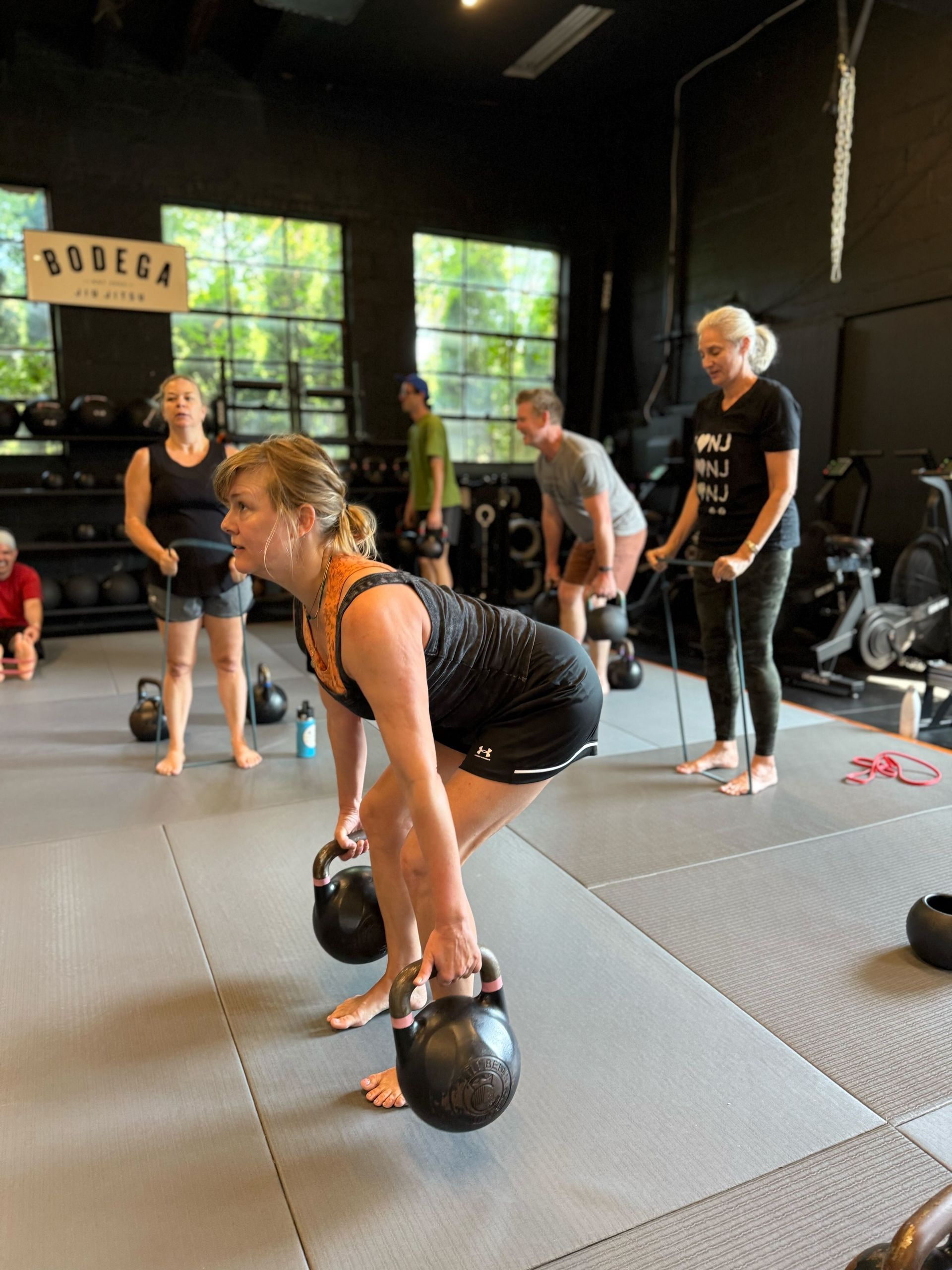
And yes, the group part matters. Not in a loud, performative way, but in a practical way. When the room is moving together and a coach is guiding the details, it becomes easier to keep your promise to yourself.
Why Fitness Classes accelerate progress in Maplewood
Maplewood is full of people who want to take care of themselves, but do not always have time for separate strength days, cardio days, and mobility days. That is where the right class structure makes a difference. In one hour, we can train multiple systems on purpose: strength, conditioning, core stability, and mobility.
Fitness Classes also remove the biggest friction points that stall progress:
- Not knowing what to do when you walk in
- Doing too much too soon, then needing a week off
- Repeating the same “favorite” movements and missing the basics
- Skipping the unglamorous work that prevents aches, tweaks, and plateaus
When training is planned, coached, and repeated consistently, your body adapts. You build capacity in a way that sticks, even if your week is busy and a little messy.
What our 60 minute Fitness Classes look like
Our sessions are 60 minutes and intentionally segmented. You are not guessing, wandering, or trying to piece together a workout from memory. We coach you through a structure that stays familiar while still progressing over time.
Segment 1: Joint mobility and warm up
We start by preparing your joints and nervous system for the work ahead. Think hips, ankles, shoulders, and thoracic spine mobility, plus light movement that raises your temperature and turns on your core. This matters more than most people realize, especially if you spend any part of your day sitting, driving, or leaning over a laptop.
A good warm up also gives us a chance to see how you are moving that day. Some days your squat feels smooth. Some days your hips feel tight. We adjust accordingly, because real training is not rigid.
Segment 2: Strength and technique with compound lifts
Next, we focus on a primary strength pattern, coached carefully. We regularly use compound lifts and foundational movements like:
- Squats and squat variations
- Deadlifts and hinge variations
- Push ups and pressing patterns
- Rows and pulling patterns
- Kettlebell swings for power and conditioning carryover
This is where form first coaching shows up. If you are newer, we might use a box squat to dial in depth and control. If you are more experienced, we might add load, complexity, tempo, or more challenging variations while keeping your mechanics clean.
The point is not to chase intensity at the expense of movement quality. The point is to get stronger in a way that feels stable and repeatable.
Segment 3: Conditioning intervals that build stamina without chaos
We finish with conditioning that supports heart health, work capacity, and that “I have more gas in the tank” feeling in daily life. Intervals are structured and coached so you understand the target: pace, breathing, transitions, and posture.
Conditioning does not have to be a suffer fest to be effective. We want you leaving class feeling worked, not crushed. That difference is what helps you come back, and coming back is what creates change.
Segment 4: Reset, breathe, and leave better than you arrived
We like to close with a short downshift when the day calls for it: breathing, mobility, or light core work that helps you feel put together before you head back into your life. It is a small thing, but it matters when you are trying to build a consistent habit.
Strength in numbers: how the group drives consistency
The biggest benefit of group training is not that you try harder because someone is watching. The real benefit is accountability that feels normal and supportive.
In a small group, you notice patterns. If you usually come on Tuesdays, people expect to see you. If you have been working on your deadlift position, your coach remembers the cue that clicked last week. This creates momentum, and momentum is a powerful thing.
There is also a practical learning effect. When you see someone scale a movement intelligently, you learn that progress is not about ego. When you see someone add load gradually and move well, you learn patience. Those lessons carry into your own training faster than you might expect.
Small group coaching: personal attention without the pressure
Our class sizes are intentionally small so coaching can stay personal. That means we can actually coach, not just lead. You get feedback on your positions, your bracing, your tempo, and the little details that keep you training for the long haul.
Small group also keeps the vibe grounded. You are here to get better, not to perform. You can focus, ask questions, and learn your body.
If you have ever felt unsure in a big gym environment, Fitness Classes in Maplewood NJ with true coaching can be a relief. You walk in, you get guided, and you leave knowing you did something worthwhile.
Scalable training for beginners and experienced athletes
A good program meets you where you are, then nudges you forward. That is what we mean by scalable.
If you are just starting, scaling might look like:
- Box squats to build confidence and control
- Incline push ups to own the pressing pattern
- Lighter kettlebell swings to learn hinge mechanics safely
- Shorter interval rounds to build aerobic capacity gradually
If you are experienced, progress might look like:
- Adding load while keeping technique crisp
- Increasing complexity, such as tempo work or pauses
- Refining mechanics so you can express more power with less strain
- Pushing conditioning intensity in a controlled, measurable way
Either way, our north star stays the same: coached movement that builds you up.
Balanced programming: why we blend strength, cardio, core, and mobility
One sided training can feel productive for a while, but it eventually catches up. Cardio only plans often leave people feeling underpowered. Strength only plans sometimes neglect stamina and mobility. Random high intensity sessions can spike fatigue without building a durable base.
Our Fitness Classes are built to cover the bases, week after week, in a way that supports general physical preparedness. That is a fancy phrase for something simple: you feel capable in real life.
That might show up as:
- Carrying groceries without your shoulders creeping up to your ears
- Walking up stairs without the “why is this hard” moment
- Feeling steadier when you pick something up off the floor
- Having better posture and less nagging tightness from desk life
These are the wins that make training feel relevant, not abstract.
What progress actually looks like over a few months
Progress is not just a number on a dumbbell, although strength gains are great. It is also movement confidence, better recovery, and consistency.
Here is a realistic timeline we often see when you attend regularly and let coaching do its job:
1. Weeks 1 to 2: You learn the flow, the warm ups, and the key movement patterns without feeling lost. Soreness might happen, but it becomes manageable.
2. Weeks 3 to 6: Technique improves, loads become more appropriate, and conditioning starts to feel less intimidating. You recover faster between efforts.
3. Weeks 7 to 12: Strength and stamina become noticeably different in daily life. You move with more control, and you can handle harder sessions without feeling wiped for days.
The most important piece is simple: you keep showing up. Fitness Classes make that easier because the structure removes decision fatigue.
Fitting Fitness Classes into a Maplewood schedule
We build our class schedule around the idea that training needs to be efficient. A 60 minute session that covers multiple qualities lets you train consistently without needing to carve out endless time blocks.
A few practical tips we share with busy adults:
- Pick two or three class times you can commit to for a month, then protect those times like appointments
- Arrive a few minutes early so you can transition out of work mode and into training mode
- Keep your expectations reasonable at first; consistency beats intensity almost every time
- Treat recovery like part of training: hydration, protein, sleep, and a little walking go a long way
This approach is not flashy, but it works, especially when life is full.
Take the Next Step
Building real momentum takes the right mix of coaching, structure, and community, and that is exactly what we aim to deliver at Soma MVMT. Our Fitness Classes are designed to be efficient, scalable, and balanced so you can build strength, stamina, and confidence without needing a complicated plan.
If you are looking for Fitness Classes in Maplewood NJ that keep you progressing week after week, we would love to have you join us for a session, get coached through the movements, and see how good a well run hour can feel at a Soma fitness center.
Become part of a team committed to growth, encouragement, and improvement by joining a fitness class at Soma MVMT.