Lifelong habits are not built on hype, they are built on repeatable workouts you can actually show up for.
If you have ever started a routine with big motivation and then watched it fade a few weeks later, you are not alone. Most people do not struggle with effort, they struggle with structure. That is exactly why Fitness Classes can be such a game changer in Maplewood: they take the guesswork out and replace it with a plan you can repeat.
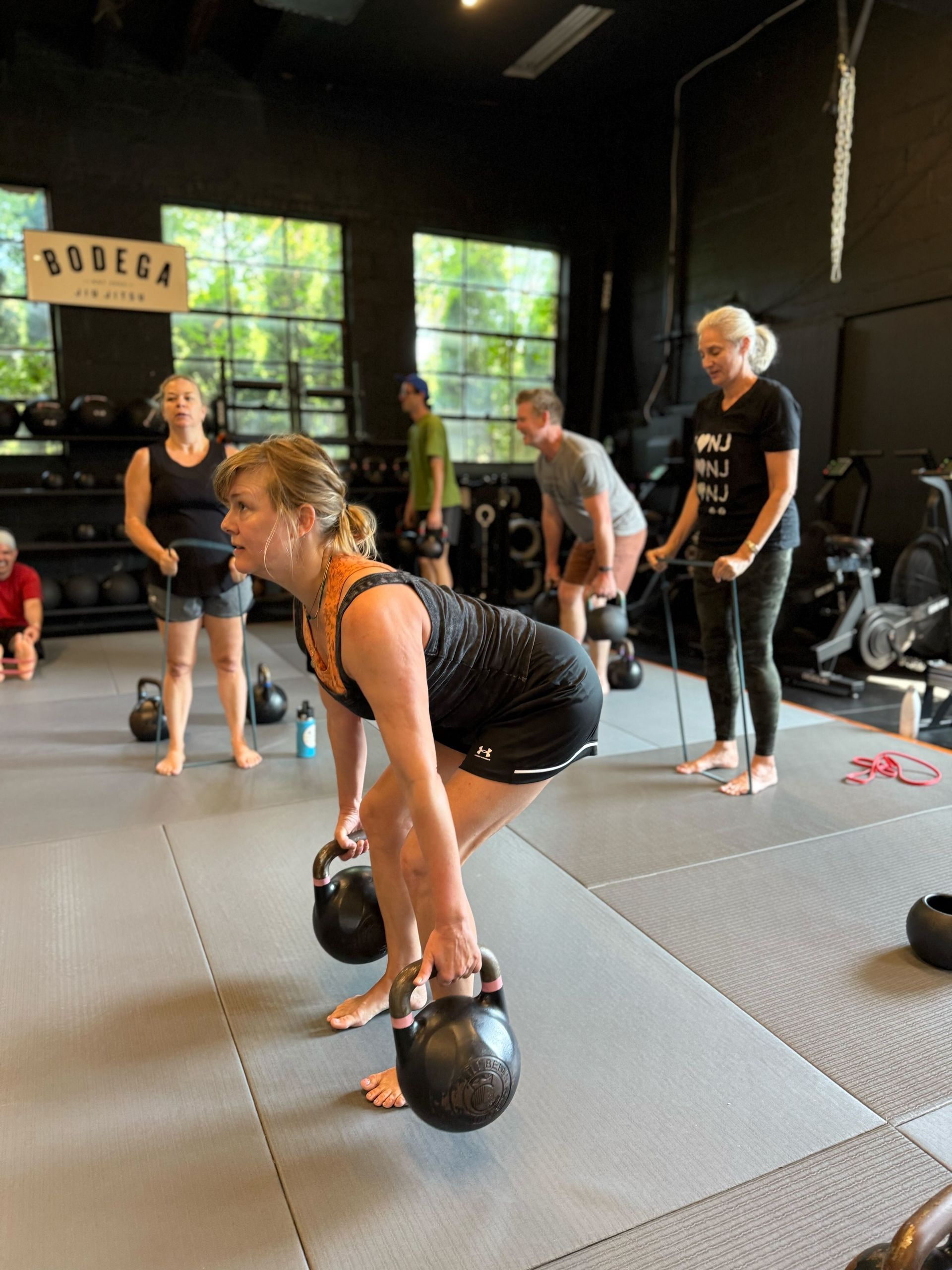
In our studio, we focus on small-group coaching because it helps you stay consistent and progress safely. Instead of wandering from machine to machine or chasing random online workouts, you get a 60-minute session that blends mobility, functional strength, conditioning, and recovery, with a coach watching the details that matter.
The goal is not a short burst of intensity that burns you out. The goal is a training rhythm you can keep for years, while your body gets stronger, your joints feel better, and your energy holds up for real life.
Why Fitness Classes Are the Fastest Way to Build a Habit That Sticks
A lifelong habit needs fewer decisions, not more. When you already know where you are going, what you are doing, and how long it will take, you can focus on showing up. That is one of the most overlooked benefits of coached Fitness Classes: your routine becomes automatic.
Small-group training also tends to improve adherence. Recent fitness industry insights consistently show that people stick with structured group programs more reliably than solo training because of accountability, coaching feedback, and the simple social pull of being expected. We see that play out in a very practical way: when your class is on the calendar, you treat it like an appointment, not a maybe.
And then there is progress. When you feel improvement quickly, your brain buys in. Getting stronger, moving better, and recovering faster creates momentum, and momentum is what turns a routine into a habit.
What We Mean by “Lifelong Healthy Habits” in Maplewood
Healthy habits are not only about aesthetics or hitting a certain number on a scale. We define lifelong habits as behaviors you can maintain through busy seasons, travel, stress, and the inevitable weeks where life feels packed.
That includes training, but it also includes movement awareness, recovery practices, and mindset. You should leave class feeling like you did something meaningful, not like you got punished for an hour.
In Maplewood and the surrounding SOMA area, we also see a very specific need: people want fitness that supports daily life. That means stronger legs for stairs, a more stable back for carrying groceries, better stamina for long days, and mobility that keeps you feeling younger than your calendar says.
The “Show Up and Win” Formula: Structure Beats Motivation
Motivation is nice, but it is unreliable. Structure is what holds you up when motivation dips. Our classes are built around a repeatable format so you do not have to psych yourself up with newness every week.
A typical 60-minute session includes:
• Mobility and warm-up to open up joints, improve range of motion, and prepare your nervous system
• Functional strength training focused on movement quality and safe progression
• Conditioning intervals that build stamina without turning every day into a suffer-fest
• Cool-down and recovery work to downshift, breathe, and leave feeling better than when you walked in
That consistency is not boring. It is the reason you can measure progress. When the structure stays familiar, you can notice what is changing: your squat depth, your push-up strength, your breathing control, your confidence under load.
Inside a 60-Minute Class: Why the Blend Matters
A lot of people think training is either strength or cardio, and you pick one based on mood. We like the hybrid approach because real life is hybrid. You need strength, you need conditioning, and you need mobility to keep accessing both without aches and limitations.
Mobility is not just stretching. It is the ability to control your body through a range of motion. When you improve mobility, strength training often feels smoother, and your conditioning gets more efficient because you are not fighting your own stiffness.
Functional strength is about patterns you actually use: hinging, squatting, pushing, pulling, carrying, bracing, and rotating with control. Conditioning then builds the engine that lets you repeat those patterns without gassing out.
Finally, recovery is where people quietly make huge gains. When you cool down properly and practice breath work and alignment, you train your body to shift out of stress mode. Over time, that supports better sleep, better focus, and a calmer baseline energy.
How We Make Fitness Classes Work for Beginners and Experienced Members
The best class is one where you feel challenged but not overwhelmed. That takes coaching, scaling, and a real commitment to meeting you where you are.
We use regressions and progressions in a way that keeps the intent of the workout the same while adjusting the difficulty. For example, if push-ups are not there yet, we may use elevated push-ups or slower tempo reps so you can build strength with good positioning. If you are more advanced, we may add intensity, volume, complexity, or load, as long as form stays sharp.
This is also why small-group matters. When class sizes stay tight, we can see the little things: where your knees track, how you brace, whether you are breathing well, whether your shoulders are creeping up during presses. Those details do not just make you “better at exercise.” They reduce injury risk and make progress feel steadier.
If you are brand new, you do not need to get in shape before joining. You just need to be open to coaching and willing to learn. If you are experienced, you do not need to worry that the class will be watered down. We can build you up without turning the room into chaos.
The Habit Timeline: What to Expect in the First 6 Months
Healthy habits become easier when you know what normal progress looks like. Here is a realistic timeline we often see when people commit to consistent Fitness Classes.
1. Weeks 1 to 2: You learn the flow, movements start to feel less foreign, and soreness becomes more predictable
2. Weeks 3 to 4: You notice daily-life carryover, like better posture, easier stairs, and more stable joints
3. Month 2: Strength starts to feel “real,” you lift a bit more, move with more control, and recover faster
4. Months 3 to 4: Consistency becomes identity, you stop negotiating with yourself and you simply show up
5. Months 5 to 6: You see compounding changes, better conditioning, fewer aches, and confidence that sticks
The biggest win is not one perfect week. It is building the kind of routine that survives imperfect weeks. We plan for that, because life is not a straight line.
Habit Stacking: How to Make Classes Automatic
If you want lifelong habits, tie your training to something you already do. This is the simplest behavior-change tool we use, and it works especially well with Fitness Classes in Maplewood NJ because your schedule can become part of your routine instead of a daily decision.
Here are a few habit stacks that tend to stick:
• Pair class with a consistent time cue, like right after school drop-off or right after you shut your laptop for the day
• Pack your bag the night before and place it near your keys so leaving is frictionless
• Choose 2 to 3 recurring class days and treat them like non-negotiable appointments
• Add a short post-class ritual, like a protein snack or a 10-minute walk, so your brain links training to feeling good
• Track one simple metric weekly, like “attendance” or “weights used,” to make progress visible
Small things like this sound almost too simple, but that is the point. Simple is sustainable.
Mindfulness, Confidence, and the Quiet Benefits of Training in a Community
Physical changes are great, but many people stay for the less obvious benefits. When you practice challenging movements, manage your breathing under effort, and learn to stay calm while your heart rate is up, you build resilience that shows up outside the studio.
We also coach in a way that emphasizes movement quality and awareness. That means you are not just counting reps, you are learning how your body works. Over time, that body awareness can improve posture, reduce nagging tension, and help you feel more present in your day.
And community matters. A supportive room changes your relationship with exercise. You start to associate training with connection, not isolation. You get familiar faces, shared effort, and the simple boost of being around people who are doing the same work.
How to Choose the Right Weekly Frequency Without Burning Out
More is not always better, especially at the start. Lifelong habits are built by choosing a schedule you can repeat even when your week gets busy.
For many people, two to three days per week is the sweet spot. It is frequent enough to build momentum and see progress, but not so intense that you feel like you are always trying to recover. As your work capacity improves, adding a fourth day can make sense, particularly if your sleep and nutrition are solid.
We also pay attention to how your body responds. If you are feeling run down, form starts breaking down, or minor aches are piling up, that is feedback. Sometimes the best move is to keep coming, but scale intensity and focus on technique and mobility for a week. Consistency stays intact, and your body thanks you for it.
What to Bring, How to Prep, and How to Get the Most From Each Class
You do not need fancy gear. You need a few basics and a mindset that prioritizes learning.
Bring water, wear comfortable training clothes, and show up a few minutes early so you can settle in. If you are new, let us know what your body has been dealing with lately, like tight hips, sensitive knees, or a cranky shoulder. That gives us a head start on smart modifications.
During class, focus on these three cues:
- Breathe with intention, especially during strength work, so you stay stable and in control
- Own the range of motion you have today, then gradually expand it over time
- Leave a little in the tank, because sustainable progress beats heroic effort
If you do that, you will build skill and confidence, not just fatigue.
Ready to Begin
If you want Fitness Classes that feel personal, structured, and genuinely sustainable, we built our Maplewood studio around that exact goal. Our approach blends functional strength, interval conditioning, mobility, and recovery in a coach-led 60-minute format that helps you improve without feeling lost or pushed past what is safe.
When you are ready, we would love to have you join a free class, experience the small-group energy, and see how quickly a consistent routine can start changing the way you move and feel. That is what we focus on every day at Soma MVMT.
Take the next step toward stronger, healthier living by joining a training program at SOMA MVMT.