When your schedule feels packed, a well-coached hour of movement can be the reset your nervous system has been asking for.
Maplewood moves fast. Between commutes, family logistics, and a calendar that fills itself, stress can start to feel like background noise you just live with. We built our Fitness Classes to interrupt that pattern, not with fluff, but with training that gives you a clear plan, a place to focus, and a way to leave feeling steadier than when you walked in.
There’s a reason people keep coming back to group training when stress is high. Structure reduces decision fatigue, coaching removes guesswork, and moving your body on purpose changes your internal pace. Our Fitness Classes in Maplewood NJ are designed to be that dependable hour: challenging enough to feel like progress, grounded enough to feel like relief.
And yes, the physical benefits matter. Getting stronger makes daily life easier. But what surprises many people is how much lighter everything feels afterward, like your shoulders remember where they’re supposed to sit.
Why Fitness Classes work so well for stress relief
Stress is not only mental. It shows up in your breathing, your posture, your sleep, and even how quickly you get irritated in normal situations. Intentional training gives you a safe, practical outlet for that pressure while teaching your body how to downshift.
In a well-run class, you get short bursts of effort, controlled rest, and a repeated message that you can do hard things without spiraling. That pattern is powerful. It’s also one of the reasons surveys consistently show that most adults report exercise helps reduce stress, because the body is built to process stress through movement.
Our approach keeps it simple: train strength, train conditioning, and pair it with mobility and recovery so you don’t leave feeling cooked. You leave feeling capable.
What you actually do in our classes (and why it calms your brain)
We center our sessions around functional strength and conditioning: movements that carry over to real life. That means patterns like squats, deadlifts, push-ups, rows, carries, and kettlebell swings. Nothing fancy, nothing random. We coach the basics really well because the basics are what make you resilient.
When you’re learning and repeating these patterns, your attention naturally narrows. You can’t half-think a deadlift or rush through a push-up with good form. That present-moment focus is a quiet kind of mindfulness. Not the sit-still-and-try-not-to-think version. The practical version that happens when you’re concentrating on a strong stance, steady breath, and a clean rep.
A typical 60-minute class includes strength work, conditioning, mobility, and a finish that helps you shift gears before you head back into your day. Good music helps too. It’s not the point, but it changes the vibe in a real way.
Small-group coaching: the difference you feel right away
Stress relief is hard to access when you feel lost in a crowd. In small groups, we can see you. We can coach your technique, adjust your range of motion, and help you scale a workout so it feels challenging without feeling unsafe.
That matters for beginners, but it also matters for experienced lifters who want more precision. Tiny form fixes add up. They protect your joints, improve your posture, and make training feel smoother. And when your body feels more aligned, your mind usually follows.
Small-group training also creates a specific kind of energy: supportive, a little playful, and focused. You’re not performing. You’re practicing.
The 60-minute format Maplewood schedules can handle
We keep classes to 60 minutes because time is real. Most people are not looking for a three-hour fitness hobby. You want something you can do consistently, even when life is busy.
Consistency is what changes stress levels over time. One great workout can lift your mood for the day. A repeatable weekly routine is what improves your baseline, so you handle traffic, deadlines, and family chaos with more patience and less tension in your body.
If you’re a parent, a commuter, or someone who runs from one responsibility to the next, a clear one-hour appointment helps. You show up, follow the plan, get coached, cool down, and leave.
Scalable training: how beginners and advanced athletes train together
A big source of stress in Fitness Classes is the fear of not keeping up. We remove that by scaling everything. The goal is always the same: train the pattern safely and progressively. How you get there depends on your current level.
If you’re new, we might use a box squat to teach control and depth. If you’re building strength, we might keep the reps lower and focus on bracing. If you’re advanced, we can add complexity, load, or a different variation that challenges you without breaking form.
Scaling is not a downgrade. It’s coaching. And coaching is what makes group training feel personal.
Here are a few common ways we scale on the spot:
- Adjust range of motion so you can move well and pain-free while you build capacity over time
- Change the load, tempo, or reps so the workout meets you where you are that day
- Swap an exercise variation, like incline push-ups before full push-ups, without losing the intent
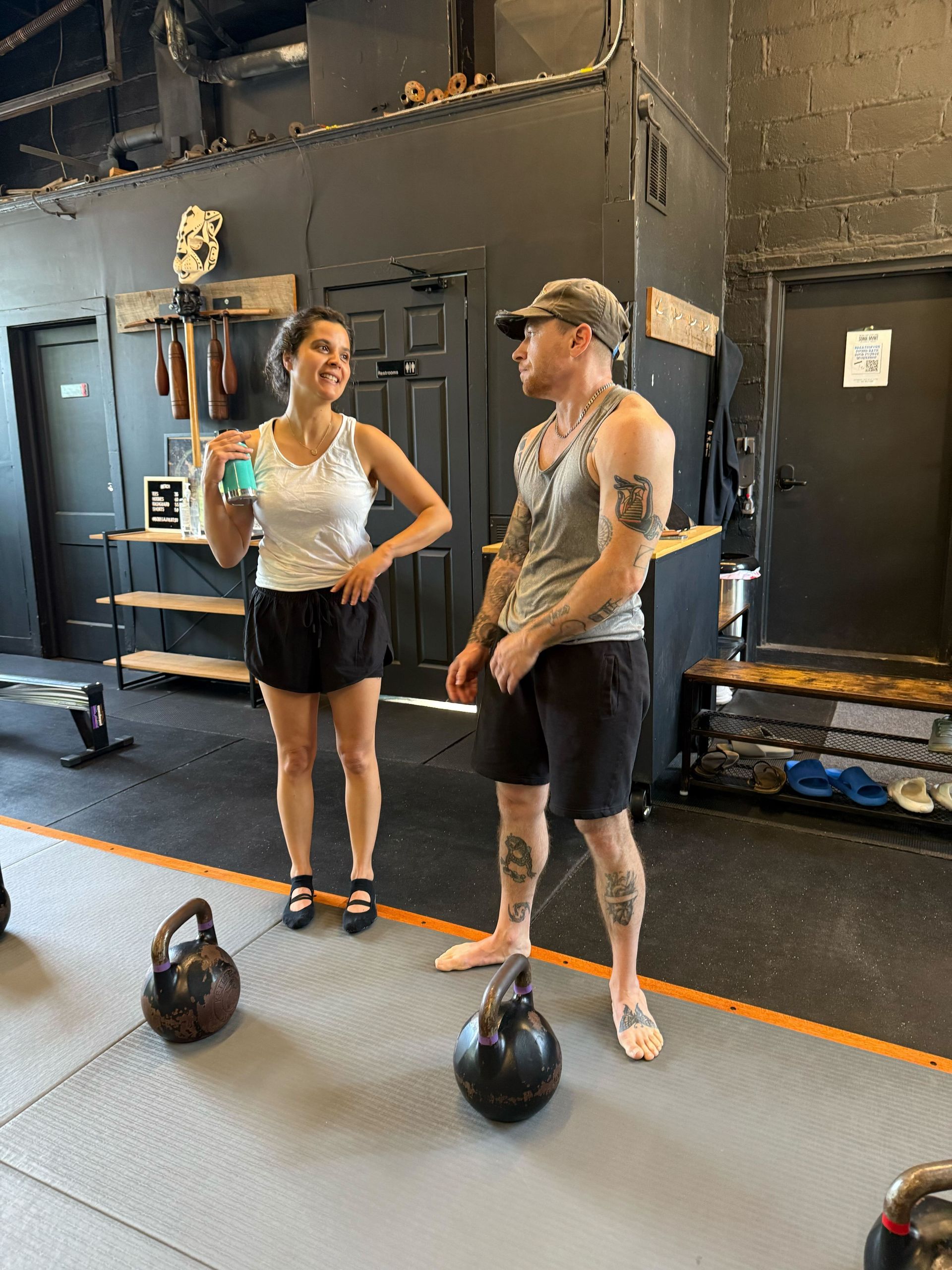
- Use implements like kettlebells and dumbbells to fine-tune strength and control
- Build in rest or pacing cues so conditioning improves without turning class into a grind
Functional strength: the quiet stress reliever you don’t expect
People often think stress relief workouts need to be gentle. Sometimes they do. But there’s a special calm that comes from getting stronger.
When your legs and hips are stronger, stairs feel easier. When your back and grip are stronger, carrying groceries feels less annoying. When your posture improves, your neck and shoulders stop working overtime. Those changes reduce background physical stress, the kind that makes you tired before your day even starts.
Strength training also builds confidence in a grounded way. Not hype. Just proof. You show up, you practice, you improve. That is a stabilizing loop, especially during busy seasons.
Conditioning without burnout: why the right intensity matters
Conditioning is part of our Fitness Classes because your heart and lungs are part of your stress response system. When your conditioning improves, your body gets better at handling spikes: rushing to a meeting, running after a kid, hauling a suitcase, getting through a long day.
But we avoid the all-out, every-day approach because it backfires. Too much intensity can make stress worse, especially if sleep is already shaky. Our goal is to build stamina and resilience with smart intervals, good pacing, and coaching that keeps you from going off the rails.
You should leave feeling worked, not wrecked.
Mobility, breathwork, and recovery: where relief becomes real
Strength and conditioning do a lot, but mobility and recovery are often the missing pieces for stressed-out bodies. Tight hips, stiff upper backs, and shallow breathing patterns tend to travel with stress. We address that directly.
We integrate mobility work to help you move better and feel looser. We also coach breath and reset moments, especially toward the end of class, so you don’t jump straight from hard effort into the rest of your day with your nervous system still on high alert.
This is one reason people describe a calmer energy after class. You’re not just tired. You’re regulated. There’s a difference.
What a first week can look like (simple, realistic, doable)
Starting something new can be stressful on its own, so we make onboarding straightforward. You don’t need equipment. You don’t need experience. You just need to show up ready to learn.
A typical first week might look like this:
1. Book your first class on the website and arrive a few minutes early so we can get you oriented
2. Start with lighter loads and clear technique cues, focusing on squats, hinges, pushes, and pulls
3. Learn how we pace conditioning so you can breathe, recover, and keep moving with control
4. Finish with mobility and a downshift so you leave feeling better, not just sweaty
5. Decide on a weekly rhythm that you can repeat without fighting your calendar
That first week sets the tone. From there, progress is steady and measurable.
Frequently asked questions about Fitness Classes in Maplewood NJ
Are your classes beginner-friendly?
Yes. We coach form, offer modifications, and build skills step by step. Beginners often start with box squats, incline push-ups, and lighter kettlebells so movement quality comes first.
How do these classes help with stress, specifically?
You get structured training, present-moment focus, and coached breathing and recovery. Over time, you build physical resilience, better posture, and more control over how your body responds to pressure.
What’s the time commitment?
Each session is 60 minutes. Most people feel best training a few times per week, but we help you find a schedule you can actually keep.
Do I need equipment or experience?
No. We provide what you need in class, and we prioritize safe technique over heavy loads.
Can I try a class before committing?
Yes. We offer a free trial class so you can experience the coaching and the vibe firsthand.
Take the Next Step
If you want Fitness Classes that help you feel stronger and calmer at the same time, we built our approach for exactly that. Our small-group strength and conditioning sessions combine functional movement, smart pacing, and recovery work so you can handle real life with more energy and less tension.
You’ll find us at Soma MVMT in Maplewood, and we’d love to help you get started in a way that feels welcoming, straightforward, and genuinely useful. If you’ve been looking for a reset that also builds long-term strength, our Soma fitness center is set up for that rhythm.
See firsthand what makes training at Soma MVMT special by joining a fitness class today.