The right class format can make training feel less like a chore and more like momentum you can actually keep.
Finding Fitness Classes that truly fit your life in Maplewood is not just about intensity or aesthetics. It is about walking into a room where the plan is clear, the coaching is specific, and your workout feels like it was built for a real person with a real schedule. We see it all the time: you want to get stronger, move better, and feel more athletic, but you do not want to guess your way through it.
Our approach to group training is functional and focused. We build strength, stamina, power, and confidence through a structure that stays consistent enough to feel familiar, but varied enough that you do not get bored or stuck. Whether you are brand new or already experienced, we coach you where you are and help you progress week by week.
What “Every Level” Really Means in Our Fitness Classes
When people hear “all levels,” it can sound like a vague promise. For us, it means your first day is not a stress test, and your hundredth class is not a repeat of the same routine. We coach movement patterns that scale up or down without changing the purpose of the session. You still get a real workout, and you still get coached.
If you are a beginner, we focus on quality first: safe positions, controlled reps, and smart loading. If you are experienced, we can push output, add complexity, and tighten rest periods so you keep adapting. The goal is the same for everyone: leave feeling capable, not crushed.
Fitness Classes Built Around Functional Strength and Real-World Conditioning
Most adults do not need random exercise. You need training that transfers. That is why our Fitness Classes center on functional strength, interval training, explosiveness, and general physical preparedness, also called GPP. In plain terms, we train you to be ready for life: carrying, lifting, moving fast when you need to, and staying resilient over time.
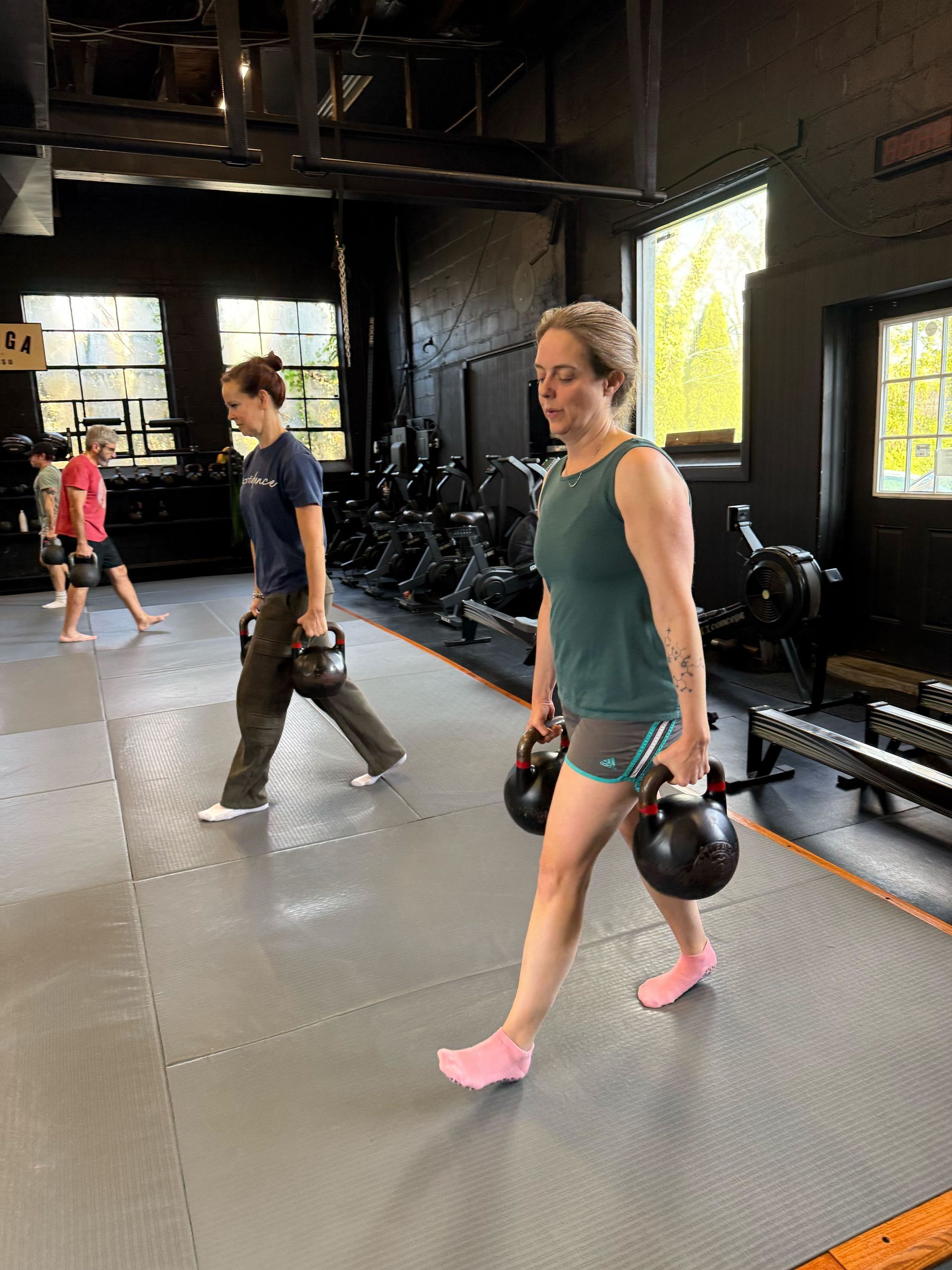
You will see plenty of compound movements because they give you the most return for your effort. Squats, deadlifts, kettlebell swings, presses, pulls, and loaded carries show up often, but with thoughtful progressions and variations. We are not chasing novelty. We are building capability.
What to Expect in a 60-Minute Class (So You Can Walk In Calm)
A big reason group training works is that you do not have to plan anything. You just show up, and we guide the hour. Our classes are 60 minutes, and the structure is intentional.
The Warm-Up: Joint Mobility and Better Movement
We start with mobility and prep work that matches the day’s training. You will open hips, wake up your shoulders, and get your core working, not just to “get warm,” but to move well when the weight and intensity rise. This part often surprises people in a good way. You leave feeling less stiff, sometimes even before the main work begins.
The Strength Block: Compound Lifts With Coaching
Next we move into strength. This is where we build the foundation: strong legs, strong hips, strong back, and a stable trunk. We coach form closely and offer options that match your level. That might mean changing range of motion, using different implements, adjusting tempo, or modifying load. The point is to challenge you without letting the workout get sloppy.
The Conditioning Piece: High Energy, Measurable, and Scalable
Then we train endurance and work capacity with interval-style conditioning. This is where you feel the “group class” energy. The room gets louder, you move with purpose, and you learn how to sustain effort. Conditioning might include short bursts for explosiveness, longer intervals for stamina, or mixed formats that train both. You work hard, but it is not chaos. We keep it organized so you can track progress.
The Cooldown: Recovery That Helps You Come Back Stronger
We end with downshifting: breathing, mobility, and recovery work that helps you leave better than you arrived. That matters, especially if you are training around work, kids, and all the other moving parts of your week.
Why Small Group Coaching Makes Fitness Classes More Effective
Big classes can be fun, but they can also make it easy to disappear. We keep our groups small enough that coaching stays personal. That means we can actually see your squat, your hinge, your press, and the little compensations that can turn into aches later.
Small group training also changes motivation. You are not performing for anyone, but you are not alone either. You get the quiet accountability of familiar faces and a coach who remembers what you did last week. Over time, that consistency adds up. A good class is great. A class you return to is what changes you.
Our Programming Priorities: Strength, Power, and GPP Without Burnout
We design training for sustainable progress. That means we care about intensity, but we care even more about repeatability. You should be able to train consistently, not just survive a session.
Here is what we prioritize inside our Fitness Classes:
• Functional strength that supports your joints and posture, using compound patterns you can build over time
• Explosiveness and athleticism through controlled power work, not reckless speed
• Interval conditioning that improves your heart and lungs while keeping technique intact
• General physical preparedness so you feel capable in everyday tasks, not only in the gym
• Recovery habits that help you train again, which is where real progress lives
If you have trained before, you will notice we do not rely on gimmicks. If you are new, you will appreciate that the plan is clear and you are never left guessing.
Beginner Friendly Does Not Mean “Easy” (It Means Coached)
A beginner friendly class is not one that avoids challenge. It is one that gives you the right challenge. We coach you through movements step by step, and we scale intensity so your body can adapt. That might mean starting with lighter loads, fewer reps, a simpler version of a movement, or longer rest. You still finish the session feeling like you worked, just without the overwhelm.
We also encourage you to tell us what is going on before class. If your back has been cranky, if your shoulders feel tight, or if you are returning after time off, we can adjust the plan. That is part of the value of coached Fitness Classes: you do not have to problem-solve alone.
For Experienced Athletes: Structure That Keeps You Progressing
If you already lift or you have an athletic background, group training can sometimes feel too generic. We avoid that by keeping progressions meaningful. You can pursue heavier loading, sharper technique, more demanding interval targets, or more advanced movement options when appropriate.
The biggest benefit experienced trainees notice is how well-rounded the training becomes. Strength plus conditioning plus mobility tends to fill gaps you might ignore on your own. And yes, it is humbling sometimes, but in a useful way. You get better.
Choosing the Right Class Cadence: How Often Should You Train?
Consistency beats extremes. For most people, two to four sessions per week is the sweet spot, depending on your recovery, schedule, and goals. We would rather see you train twice a week for six months than go hard five days a week for two weeks and vanish.
A practical way to decide:
1. Start with two classes per week for the first two to three weeks to learn the flow and recover well
2. Move to three classes per week once soreness and fatigue feel manageable
3. Add a fourth day only if sleep, nutrition, and stress levels support it
4. If you are busy, keep two days and make them consistent, same days if possible
5. Reassess every month based on energy, performance, and how your body feels
This is training for life in Maplewood, not a short-term sprint.
Getting the Most Out of Your First Month
Your first month sets the tone. If you want a simple approach that works, focus on the basics: show up, listen to coaching, and track small wins. The wins might be subtle at first, like better posture, less stiffness, or walking up the stairs without feeling winded.
A few tips we give new members:
• Arrive about 10 minutes early so you can settle in and ask questions
• Wear shoes you can move and lift in comfortably, nothing fancy required
• Eat something light beforehand if you tend to crash mid-workout
• Let us know about old injuries or current limitations before class starts
• Keep your goal simple for the first month: consistency, not perfection
That last one matters more than people expect.
Why Group Fitness Works Especially Well in Maplewood
Maplewood has a rhythm: commuting, family schedules, local events, and a calendar that fills up faster than you meant it to. Group Fitness Classes work here because you get an efficient hour where everything is planned and coached. You do not have to negotiate with yourself about what to do. You follow the session, you get it done, and you leave with that clear-headed “I did something good today” feeling.
Community helps, too. When you recognize people and feel supported, training stops being a solo grind. It becomes a part of your week you can actually protect.
Take the Next Step
If you want Fitness Classes that combine functional strength, conditioning, mobility, and real coaching in a supportive small-group setting, we built Soma MVMT for exactly that. Our sessions stay structured, scalable, and challenging in the right way, so you can train consistently and see progress without feeling run down.
You do not need to be “in shape” to start. You just need a willingness to show up, learn the movements, and let us guide the plan. When you are ready, we would love to have you in class at Soma MVMT in Maplewood.
See how guided fitness classes can elevate your strength and conditioning by joining a free fitness classes trial at SOMA MVMT.