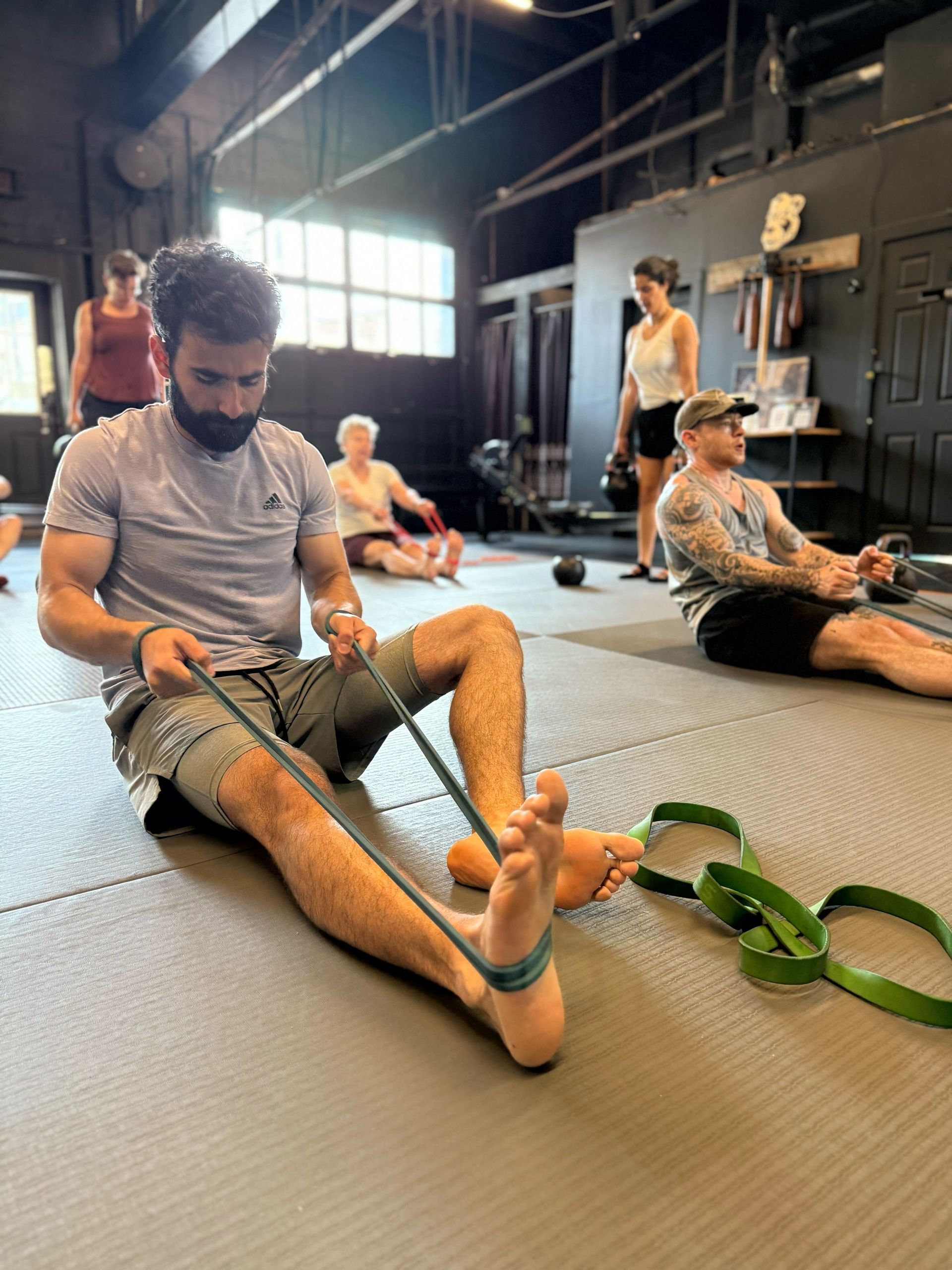
The right class can feel like a reset button for your body and your week, if you know how to use it well.
Fitness Classes are having a real moment, and not just because they are fun (though that helps). The global fitness industry is now over 90 billion dollars, and group workouts are growing fast because people stick with them longer when community and coaching are built in. We see it all the time: when you show up, get coached, and feel known in the room, consistency stops being a struggle and starts becoming routine.
Here in Maplewood, schedules can be tight. You might be commuting, juggling family logistics, or simply trying to fit training into the small pockets of time that exist between everything else. Our job is to make Fitness Classes work harder for you, so every session moves you forward, even when life gets busy.
This guide breaks down how to get more out of each class: how to choose the right modality, how to use simple tracking tools, how to recover well enough to keep progressing, and how to build momentum without burning out.
Start With a Clear Goal, Not Just a Vibe
A class can be upbeat and still not match what you need right now. The first step to better results is choosing Fitness Classes based on your goal and your current reality, not the version of you that has unlimited time and perfect sleep.
If your primary goal is fat loss, you will usually do best with a blend of strength work and intervals, plus enough weekly consistency to create a real training signal. If your goal is strength and muscle, you still want conditioning, but you want to protect performance so you can lift with quality. If your goal is stress relief and mobility, you want breathing, movement quality, and a pace you can sustain.
A simple way to ground your decision is to pick one main outcome for the next 6 to 8 weeks. Not forever. Just long enough to measure. Then we can help you use the class schedule like a plan rather than a menu.
Choose Modalities That Deliver the Most Bang for Your Time
Trends are useful when they reflect what works, and right now the data lines up with what we coach daily. Strength training and HIIT remain top class formats because they build a broad base: better body composition, stronger joints, improved work capacity, and the kind of resilience you feel when you carry groceries or take stairs without thinking about it.
Functional training also matters because it helps your workouts transfer to real life. That means training balance, coordination, core control, and the ability to produce force safely in everyday positions. Power training is gaining traction too, especially for older adults and anyone who wants to feel stable and quick, not just strong in a slow, grindy way.
When your week is packed, the sweet spot is often:
- Two strength focused classes for progressive overload and muscle
- One conditioning focused class to push your engine
- One mobility or recovery centered session to keep you moving well
That mix can be adjusted, but the idea stays the same: the best Fitness Classes are the ones that complement each other instead of competing for your recovery.
Show Up Early, Because the First Five Minutes Matter
It is tempting to slide in right on time, drop your bag, and jump into warmups. We get it. But arriving even 5 to 10 minutes early changes everything: you settle your nervous system, you can ask a quick question, and you can actually warm up with intention instead of rushing.
Those first minutes are also where we can fix small issues before they become big ones. Maybe your hips feel stiff, your shoulder is cranky, or you are coming off a long drive. Tiny adjustments, like changing your stance width or swapping a movement pattern, can mean the difference between “I pushed hard” and “I trained smart.”
If you use wearables, early arrival is also the moment to check that your device is reading correctly. Wearable tech is the number one trend in the American College of Sports Medicine 2025 survey, and it makes sense: a little data helps us coach effort and recovery more accurately in group settings.
Use Wearables and Apps Like a Coach, Not a Scoreboard
Tracking is powerful, but only if you track the right things. Heart rate, step count, and calorie estimates can be helpful, but the real benefit is learning how your body responds so you can adjust. A wearable can tell you when you are pushing too hard too often, or when you are not pushing hard enough to create change.
We recommend focusing on a few simple metrics:
- Heart rate zones during conditioning segments, so effort matches the goal
- Recovery trends like resting heart rate and sleep duration, so you know when to scale
- Consistency metrics like weekly session count, because progress loves repetition
Mobile apps are another major trend, and we like them for habit support. A basic training log in an app can show you patterns you would miss otherwise, like how your best workouts happen on days you hydrate earlier, or how your performance dips when you stack intense classes without recovery.
The big idea: use tech to get feedback, not to judge yourself. Your body is not a machine that outputs perfect numbers every day. It is a human system. Some days you will feel amazing. Some days you will need to dial it back and still be proud you showed up.
Ask for Coaching Cues, Then Commit to One Change Per Class
One of the most underrated ways to level up in Fitness Classes is to stop trying to fix everything at once. Form can feel like a moving target, especially when you are tired, but you do not need ten cues. You need one cue you can actually execute.
We often suggest you pick one focus per session:
- Bracing your ribcage and pelvis during lifts
- Controlling your tempo on the way down
- Keeping your knees tracking well on squats and lunges
- Using your breath to stay relaxed under effort
When you stick with one cue, you build skill. Skill leads to better output. Better output leads to results. This is how you turn a group class into something that feels more like semi private coaching, without needing extra time.
Train for Progression, Not Randomness
Variety is motivating, but too much randomness is a progress killer. If every week is totally different, your body cannot adapt in a measurable way. We design training blocks so you see movements and patterns often enough to improve, while still keeping the week engaging.
You can support that design by thinking in training cycles. For example, if we are working a hinge pattern, you might track how your deadlift variation feels over several weeks. If we are emphasizing conditioning, you might notice how quickly you recover between intervals by week four compared to week one.
Progression does not have to be dramatic. It can look like:
- One more rep with clean form
- Slightly heavier load while staying smooth
- Faster recovery between sets
- Better range of motion without discomfort
This is especially important if you have hit a plateau. Plateaus usually mean one of three things: you need more consistent stimulus, more recovery, or better technique. Classes can solve all three when you approach them with intention.
Community Is Not Just Nice, It Improves Adherence
People stay consistent when they feel connected. Boutique and community driven training environments regularly show retention over 75 percent because social connection and motivation are built into the experience. In practical terms, that means when you recognize faces, when someone notices you are there, and when you feel like your absence would be noticed, you keep showing up.
If you want to maximize results, treat community as part of your training plan. Say hello. Learn names. Pick a regular class time when you can. Partner with someone for warmups or strength sets. It sounds small, but it changes adherence, and adherence is where results live.
If you are newer or more introverted, you do not need to become the loudest person in the room. You just need one point of connection. Over time, that becomes accountability that feels supportive, not stressful.
Micro Habit Stacking for Busy Maplewood Schedules
Not every week will be your “perfect training week.” That is normal. What matters is having a default plan that survives real life.
Micro habit stacking is one of our favorite tools for busy professionals and parents. It means attaching tiny actions to things you already do, so your fitness supports your day instead of competing with it. Here is a simple example: you finish a class, you drink water immediately, you walk for five minutes before getting into your car, and you log one note in your app about how you felt.
Over time, those small actions create momentum. And when momentum is there, you will find it easier to attend more Fitness Classes consistently, even if your week is unpredictable.
A Simple Class Strategy You Can Use This Week
If you want a clean starting point, here is a structure that works for many people and is easy to adjust.
1. Pick two anchor days for classes you can protect most weeks
2. Add one optional day for conditioning or skills, based on energy
3. Keep one recovery session on the calendar, even if it is lighter
4. Track one performance metric for four weeks, like reps, load, or pace
5. Reassess at the end of the month and make one change, not five
This approach keeps you consistent without being rigid. It also helps prevent the common cycle of going too hard for two weeks, getting sore and overwhelmed, then disappearing for a month.
Train Smart for Injury Prevention and Long Term Momentum
Pushing hard is part of the process, but it is not the whole process. The fastest way to stall progress is to train through pain or ignore the signals that you need to modify. Real progress is built on training you can repeat.
We prioritize movement quality, scaling options, and coaching that keeps you in the right intensity zone for the day. Wearables can help here too: if your recovery metrics are trending down, it may be smarter to choose a strength focused session with longer rest, or a low impact conditioning option, instead of piling more intensity on top of fatigue.
A few rules we recommend:
- Pain changes the plan, discomfort can be coached
- Form matters more as intensity rises, not less
- Recovery is training, because it enables the next session
Fitness Classes for Beginners and Older Adults: What to Know
Fitness Classes should meet you where you are. Programs for older adults are now a top trend, and for good reason: strength, balance, and power are protective. They support independence, reduce fall risk, and make everyday tasks easier.
For beginners, the biggest win is learning the fundamentals in a coached environment. You get structure, clear progressions, and a chance to build confidence without guessing in a crowded gym space. We keep the focus on safe technique, manageable intensity, and gradual progression.
For adults 50 and up, we often emphasize functional patterns and power work that is appropriate and controlled. Power does not mean reckless jumping around. It can be as simple as standing up quickly with control, using light medicine balls, or moving with crisp intent. The goal is to feel capable in daily life, not just tired after class.
Take the Next Step With Soma MVMT
If you want Fitness Classes that feel personal, measurable, and genuinely motivating, we built Soma MVMT around that exact experience here in Maplewood, NJ. Our coaching focuses on smart progression, community accountability, and the little details that help you get more out of every session.
When you use the class schedule with intention, track a few meaningful metrics, and stay consistent enough to adapt, your results stop feeling random. We would love to help you find the right starting point, refine your approach, and make training a steady part of your week at Soma MVMT.
Develop consistent training habits by joining a free fitness classes trial at SOMA MVMT.