Healthy aging is less about “staying young” and more about staying capable.
Fitness Classes are often marketed like a quick fix, but for most of us, long-term health is built in quieter ways: showing up consistently, moving well, and getting stronger a little at a time. In Maplewood, healthy aging is really about staying able to do what your life asks of you, whether that’s carrying groceries up the steps, keeping up on a walk, or getting down to the floor and back up without thinking twice.
That matters because activity levels tend to drop as we get older, even when people genuinely want to stay active. In 2024, only 38.4 percent of U.S. adults age 65 and older met federal aerobic-activity guidelines, compared with 54.0 percent of adults ages 18 to 34. In New Jersey, 24.6 percent of adults age 65 and older in fair or better health reported no physical activity or exercise outside their regular job during the previous 30 days.
We see the same pattern locally: people are busy, bodies change, aches show up, confidence takes a hit, and “I’ll start next month” turns into next year. Our goal is to make Fitness Classes feel practical and doable, with coaching and structure that help you build strength, mobility, balance, and endurance in a way that supports your life now and later.
Healthy aging is about capability, not a number on a birthday cake
When we talk about healthy aging, we are not talking only about age 65 and up. We are talking about keeping your capacity through your 30s, 40s, 50s, and beyond so you can keep doing the things you care about without negotiating with your body all day.
Capability is a blend of qualities that work together:
• Strength to lift, carry, and stabilize
• Mobility to move through comfortable joint ranges of motion
• Balance to feel steady and coordinated
• Cardiovascular conditioning to handle daily demands without feeling wiped out
• Recovery habits so you can train consistently without feeling beat up
Maplewood already reflects this interest in accessible, functional movement. Local offerings from the township include options like balance and stability, strength and stretch, chair yoga, and meditation. That tells us something important: people want fitness that supports real bodies and real schedules, not just intense workouts for the already-fit.
Fitness Classes can pull these pieces into one routine so you are not trying to patch together a plan from random workouts. You get a repeatable weekly rhythm, a coach watching what you are doing, and a community that makes consistency feel less lonely.
Why strength training matters at every age
Strength is one of the most direct tools we have for protecting independence. Resistance training supports muscle strength, bone health, mobility, and the functional capacity you need for everyday tasks like climbing stairs, carrying groceries, and standing up from a chair. That is not a niche “athlete” thing. That is daily life.
Strength also has a confidence effect that people do not always expect. When you train movements like squatting, hinging, pushing, pulling, carrying, and getting up and down from the floor, you stop treating basic tasks like they are risky. You start to trust your legs, your grip, your core, and your balance again.
Functional strength is not bodybuilding, and it should not feel intimidating
A lot of adults avoid strength training because they picture heavy barbells, loud rooms, or workouts that move too fast. We coach strength as skill-building. That means we pay attention to how you move, then we choose the right variation and load for where you are today.
If you are newer, “strength training” might start with:
• Controlled bodyweight patterns to learn positions
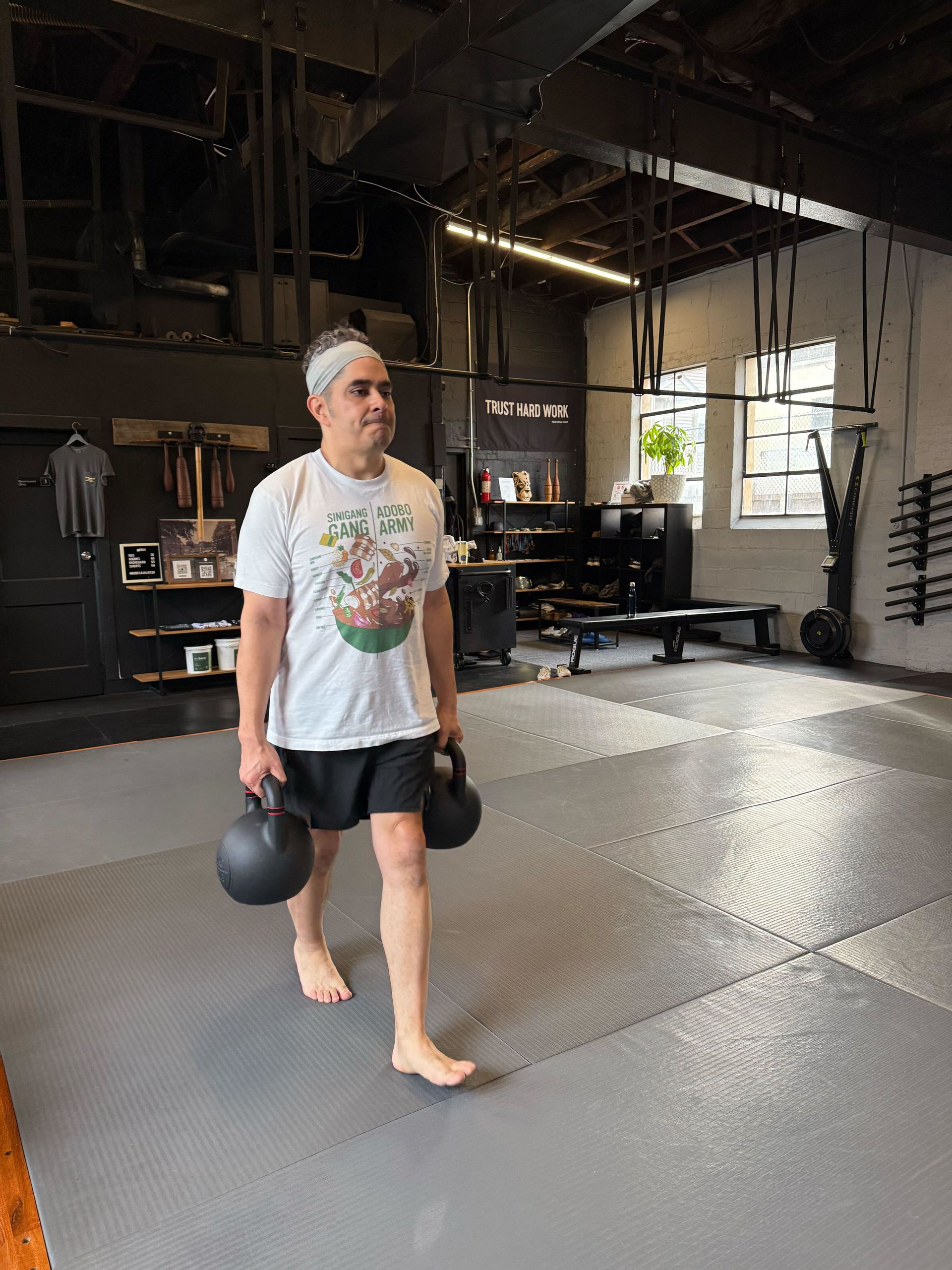
• Dumbbells or kettlebells that match your current comfort level
• Slower tempos so you can feel what you are doing
• Stability support when balance is a factor
The point is progression, not perfection. Fitness Classes work best for healthy aging when you can keep showing up, gradually increasing challenge without burning out.
The role of mobility and balance in feeling good in your body
Balance and mobility work matter because healthy aging is not just about having strong muscles. It is about using them well. Balance and mobility training address stability, coordination, joint range of motion, and confidence in movement, all of which become more valuable as life gets busier and bodies get a little less forgiving.
Mobility is also misunderstood. It is not just stretching at the end when you are already tired. We treat mobility as preparation so your joints are ready for the work ahead. The “warm-up” is where you create options: hips that open a bit more, ankles that move better, shoulders that feel less cranky. It is subtle, but you feel it when you walk out.
What better balance actually looks like day to day
Better balance is not only standing on one foot. It is:
• Feeling steady stepping off a curb
• Turning quickly without feeling wobbly
• Carrying something on one side without tipping
• Going up and down stairs with control
• Moving confidently on uneven sidewalks and small hills around town
When balance improves, people often move more, because movement feels safer. That consistency is where results come from.
Why coached small-group Fitness Classes help you stay consistent
Most people do not need more fitness information. You can find a workout anywhere. What people need is a plan they can repeat and the support to keep it going when motivation dips.
Coached small-group training is a sweet spot. You get the energy of group exercise, but with more eyes on your technique and more options for scaling. That is important for healthy aging because two people can be the same age and still need very different progressions.
Group training also adds something harder to measure but easy to feel: accountability and connection. Showing up is easier when someone expects you, and when you recognize a few familiar faces. It turns “working out” into part of your week instead of a constant decision.
How our 60-minute class structure supports longevity
Our Fitness Classes follow a 60-minute format that balances preparation, strength, conditioning, and recovery. We like this structure because it keeps things complete. You are not guessing what to do, and you are not skipping the stuff that tends to get skipped, like mobility and cooldown.
Here is how a session typically flows:
1. Joint-mobility preparation to get your body ready to move well
2. Strength work focused on foundational patterns and progressive resistance
3. Endurance and conditioning to build stamina and support heart health
4. Cooldown and recovery work to downshift and leave you feeling better, not wrecked
That blend matters. Strength helps you build and keep capability. Conditioning supports daily energy, walking tolerance, and overall work capacity. Mobility and recovery help you train more consistently, because you are less likely to pile stress on top of stress.
If you are the kind of person who wants to understand the “why,” this is it: healthy aging is rarely one quality. It is a system. Our class format trains the system.
What to expect if you are new, returning, or working around discomfort
A common worry is, “Do I need to get in shape before I join?” No. We build Fitness Classes with entry points. Your starting point can be strong, rusty, nervous, athletic, or brand new. We coach the person in front of us.
How we scale exercises without making it a big deal
Scaling can be as simple as changing one variable while keeping the goal of the movement the same. Depending on what you need, we can adjust:
• Range of motion so joints stay comfortable
• Load so you can keep control and good form
• Pace so you can breathe and stay steady
• Complexity so you learn the pattern first
• Support tools so balance is not a barrier
If you have knee, hip, shoulder, or back discomfort, we want you to tell us what is going on. We can often modify, but it is also smart to consult a medical professional when pain is persistent, sharp, or worsening. We keep training focused on what you can do safely and confidently.
Will the workouts be high impact?
Many adults are not looking to jump around, especially if joints are sensitive. Conditioning can be adjusted in lots of ways without relying on high impact. We can build intensity through loaded carries, interval timing, bike or row options when available, or lower-impact movement choices that still challenge your heart and lungs.
How often should you come to class for healthy aging?
Federal guidance generally recommends that adults 65 and older work toward at least 150 minutes of moderate-intensity aerobic activity per week, alongside muscle-strengthening and balance activities, adjusted for health status and ability. We like that framework because it is flexible, and it points you toward consistency.
For many people, a realistic starting point is two to three Fitness Classes per week, then adding walking on other days. If recovery is a challenge at first, we would rather see you come twice a week for months than go hard for two weeks and disappear.
Your best plan is the one you can repeat. Strength and conditioning are built through steady exposure, not occasional heroic effort.
A quick “Is this class right for me?” checklist
If you are wondering whether this approach fits, use this quick list:
• You want to feel stronger for everyday tasks, not just in the gym
• You care about mobility, balance, and staying independent as you age
• You are returning to exercise after time away and want a plan that makes sense
• You prefer coaching and feedback instead of figuring it out alone
• You want a supportive routine in Maplewood or South Orange that you can stick with
Fitness Classes work best when you feel seen, coached, and appropriately challenged. That is the standard we hold ourselves to.
Take the Next Step
If you want training that supports real-life strength, steadier balance, better movement, and the kind of stamina that makes daily life easier, our small-group model was built for that. We keep the process practical: coach-led sessions, a clear class flow, and progressions that respect your starting point.
You can find us at 6 West Parker Avenue in Maplewood, and we serve adults across Maplewood and South Orange who want a longevity-focused approach that still feels like a real workout. When you are ready, Soma MVMT is here to help you turn Fitness Classes into a steady, sustainable part of your week.
Ready to move, train, and improve? Get started with Soma MVMT.