The best training is the kind you feel when you climb stairs, pick up groceries, and get down to the floor without thinking twice.
Fitness Classes are often marketed as a way to sweat, burn calories, and push hard, but for most adults in Maplewood, the bigger win is simpler: moving through your day with less effort and more control. We built our coaching and programming around that real-life definition of progress, because it is the difference between “working out” and actually feeling capable.
Everyday mobility is not just about touching your toes or stretching longer. It is the blend of range of motion, strength, balance, stamina, and coordination that shows up when you carry a laundry basket, step off a curb, reach overhead, or stand up from a low chair. Harvard Health connects mobility exercise with maintaining movement and supporting strength, stamina, flexibility, and balance, which is exactly the mix most people need for day-to-day function.
In this guide, we will explain what mobility really means, why strength matters for moving well, and how our coach-led, small-group Fitness Classes in Maplewood, NJ are structured to build confident movement you can actually use.
What “everyday mobility” really means (and why flexibility is only part of it)
Mobility is a skill, not a stretch. Flexibility is the ability of a muscle to lengthen, but mobility includes what you can control through a range of motion while staying steady and coordinated. Think of it as usable movement.
In real life, mobility shows up in moments like:
- Walking with a smooth stride instead of shuffling
- Going up and down stairs without bracing on the railing
- Rotating to buckle a seatbelt or grab something from the back seat
- Getting up from the floor without needing a “plan”
- Reaching overhead without shrugging your shoulders to your ears
Those are not just flexibility problems. Those are strength, balance, coordination, and endurance problems, too. When we program training, we treat mobility as active control: you build range of motion and the strength to own it.
Why strength is essential for moving well
Mobility without strength is like having a wider “workspace” but no tools. You might be able to get into a deeper position, but you cannot control it, and you do not trust it under load. Strength gives your joints support, helps you stabilize through awkward angles, and makes daily tasks feel lighter.
Resistance training can use body weight, dumbbells, kettlebells, medicine balls, and other tools, and it is one of the most direct ways to build the muscle capacity that supports mobility. We like strength work that carries over to the real world, because most people do not need circus tricks, they need durable basics done well.
A practical example: if your hips have the range to squat lower, that is useful, but it becomes meaningful when you can stand up smoothly, keep your knees tracking well, and repeat it without your back doing the work. That is strength, positioning, and practice coming together.
How coach-led Fitness Classes support mobility and strength
Many adults are busy, and consistency usually beats the occasional “monster workout.” A structured class matters because it removes the planning burden. You show up, we coach, and the session has a clear purpose.
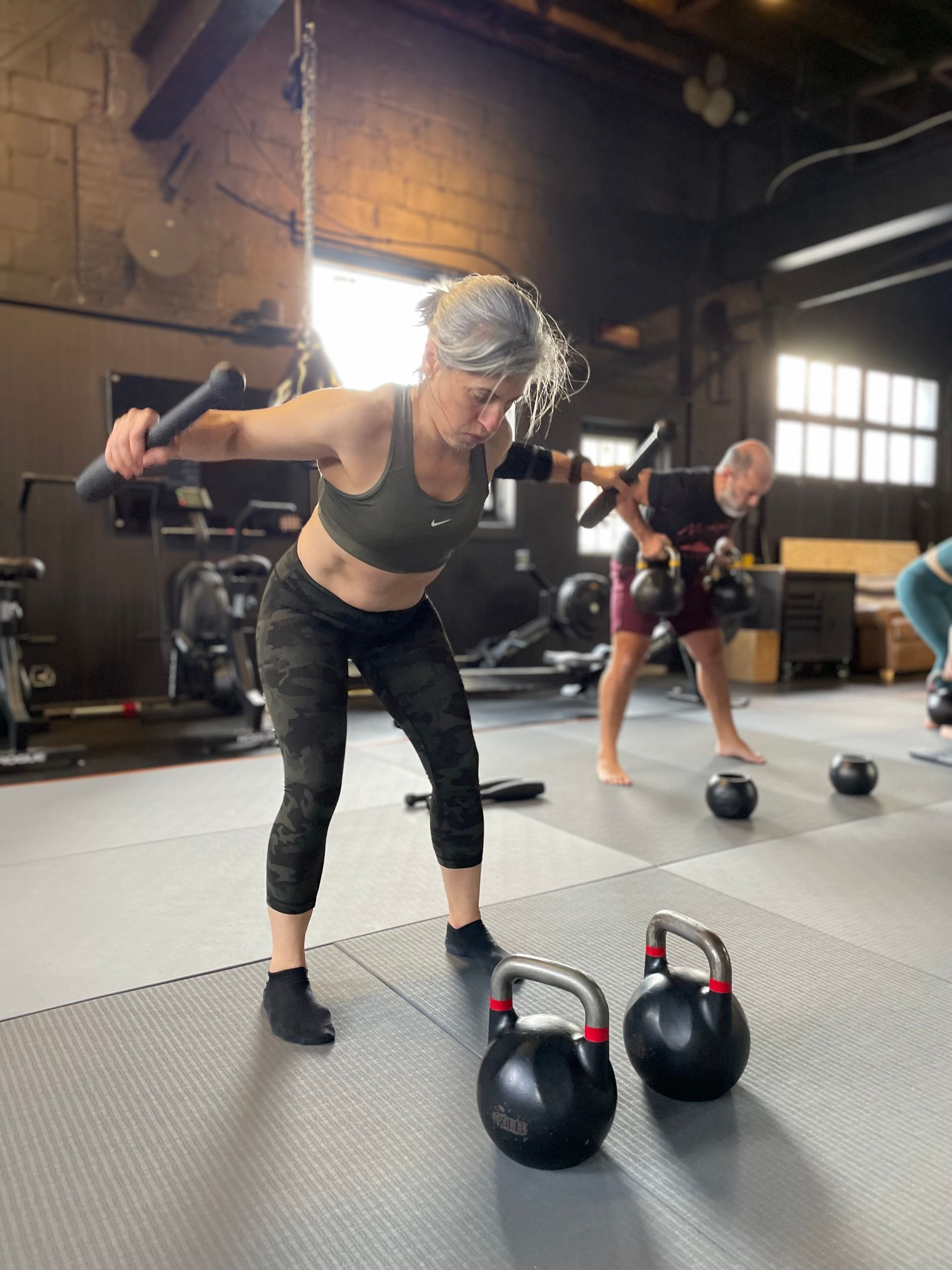
In our Fitness Classes, we focus on progressive resistance training, balance and stability, conditioning, and purposeful movement that connects to everyday tasks. Coaching matters here. Small details like foot pressure, breathing, bracing, shoulder position, and tempo can change how an exercise feels and what it trains.
When you are coached in real time, you spend less energy guessing and more energy practicing quality movement. Over weeks and months, that is where mobility and strength start to feel like part of your normal life.
What happens in our 60-minute class (and why the order matters)
We run 60-minute, coach-led sessions with a predictable structure, because your body responds well to routines that build from preparation to effort to recovery. Each piece supports the next.
Joint-mobility warm-up
We start by getting joints moving and tissues warm. This is not random stretching. We use mobility drills and movement prep to wake up hips, ankles, thoracic spine, shoulders, and core control, so you feel more “put together” before loading anything.
Strength training
This is the backbone. We train patterns like squats, hinges, presses, pulls, carries, and rotational control. Strength work builds the capacity you need for stairs, floor transfers, lifting, and holding posture under fatigue. We coach technique and scale loads, so you can train hard without turning every set into a grind.
Endurance and conditioning
Conditioning is where you learn to keep moving when life feels a little heavy. We blend intervals and circuits that challenge breathing and stamina, because being strong is great, but being strong and winded every time you carry something upstairs gets old fast.
Cool-down and recovery
We finish with downshifts: breathing, gentle mobility, and recovery-focused work. This is where your nervous system gets the signal that training is done, which helps you leave feeling better, not fried.
Everyday movements our training is designed to support
We like to connect gym movements to real outcomes, because it makes training feel less abstract. It also helps you notice progress in the places that matter.
Squatting and sitting down without effort
Squats are not about impressing anyone. Squatting patterns support sitting and standing, getting up from a low couch, using a toilet without knee pain flare-ups, and standing up while holding a child or a bag.
Hinges for picking things up safely
Hip hinge work (think deadlift patterns) teaches you to load hips and legs instead of rounding through the back. That shows up when you grab a heavy laundry basket, lift a package, or pick up a cooler for a weekend outing.
Carries for groceries, luggage, and life
Loaded carries are the unsung hero of functional training. Carrying weight while staying tall trains grip, core stability, breathing control, and gait. This is one of the most direct “real world” patterns we use.
Pulling strength for posture and joints
Rows, pull-downs, and pulling variations strengthen the upper back and help your shoulders sit in a more supported position. If you spend time at a desk, this kind of work often feels like a reset.
Rotational and anti-rotational control
Real life is rarely symmetrical. You twist, turn, reach, and pivot all day. Training rotation and resisting unwanted rotation helps you move with control when you reach across your body or change direction quickly.
Why our small-group format helps you progress
Big rooms can be motivating, but many people get stuck when nobody is watching movement quality. Our classes are capped at 12 participants, which gives us room to coach the details without killing the energy of a group.
Here is what that individual attention looks like in practice:
- We help you choose the right variation when a joint feels cranky or stiff that day
- We cue setup and alignment so you feel the right muscles working
- We scale loads and reps to match your current capacity, not your ego
- We track progression over time so you are not repeating the same week forever
- We make space for questions, because confusing training is hard to stick with
We cannot promise a specific outcome for every person, but we can promise that you will not be left on your own to guess what to do next.
Modifications for beginners and for adults returning to exercise
Beginners are not a problem to “fix.” Most people simply need a clear starting point and permission to progress gradually. If you are new to training or returning after time off, we coach you toward repeatable wins: consistent attendance, solid technique, and manageable intensity.
We also ask you to speak up. If you need something modified or substituted, tell us before class or during the session. That communication helps us coach you better. If you have significant, worsening, or unexplained pain, we recommend talking with a healthcare professional, because a group class is not a substitute for diagnosis or rehab.
The goal is to train in a way that supports your life, not to “push through” something that does not feel right.
How often should you take Fitness Classes (and how to recover)
Broad adult activity guidance often includes at least 150 minutes of moderate aerobic activity each week, strength training at least twice weekly, and balance-focused exercise. Your best schedule depends on your training history, recovery, and what else you do outside the gym.
For many adults, two to four Fitness Classes per week is a realistic range, especially when the sessions combine strength, conditioning, and mobility work. We would rather see you train at a pace you can sustain for months than hit an intense week and disappear for three.
Recovery is not fancy, but it is powerful:
- Sleep is the multiplier, because tissues adapt when you rest
- Protein and regular meals support strength gains and muscle retention
- Walking and light movement help you feel less stiff between sessions
- A consistent schedule keeps your joints and nervous system “used” to training
If you want mobility and strength that shows up in daily life, the unglamorous answer is repetition.
What to expect when you visit our Maplewood studio
We want your first visit to feel straightforward. Our studio is located at 6 West Parker Avenue in Maplewood, New Jersey, and we serve adults around Maplewood and South Orange who want structured training without spending endless hours in a gym.
A few practical details help new people relax:
1. Arrive a bit early so you are not rushing into the warm-up.
2. We are a barefoot facility, so you will remove shoes in the mudroom before entering the training space.
3. Wear comfortable training clothes that let you squat, reach, and move freely.
4. Bring water, and let us know about any limitations before class starts.
5. Expect coaching, not just cheering, because form and intent matter.
Our class schedule on the website is the easiest way to choose a time that fits your week.
Frequently asked questions
Will a class improve mobility or just make me tired?
A well-designed class should do both in the right order. We begin with joint mobility, build strength, layer in conditioning, and finish with recovery so you leave feeling worked and better organized.
Do I need to be fit before joining?
No. We can scale movements and loads, and we coach you from your current starting point. Consistency matters more than being “in shape” on day one.
Will strength training make me bulky?
For most adults, strength training is more likely to improve muscle retention, stability, posture, and confidence than create dramatic size changes. We focus on functional capacity, not chasing a single look.
What if I have stiffness or an old injury?
Tell us what is going on so we can modify as needed. If symptoms are significant, worsening, or unclear, get medical guidance first, then we can help you train intelligently around it.
Take the Next Step
If you want Fitness Classes that connect directly to everyday mobility and strength, our approach is built for that: joint prep, progressive strength work, conditioning you can recover from, and coaching that keeps the focus on movement quality. This is the kind of training that supports stairs, commutes, weekends, parenting, and active aging, without making your schedule feel impossible.
At Soma MVMT, we keep sessions coach-led and small-group so you can learn the details, build confidence, and stack consistent weeks of training. When you are ready, we would love to help you find a rhythm that makes you feel stronger in Maplewood, not just sore.
Challenge yourself, build your capabilities, and make steady progress at Soma MVMT.